

AI Content Batching: 90-Day Calendar Template (2026)
A 90-day AI content calendar template with weekly themes, batched generation sessions, and a posting cadence that lets a one-person team ship 270+ assets per quarter.
The reason most content calendars die in week three is not lack of discipline. It is the calendar itself. A daily-prompt calendar forces you into a daily creative state, which is the single most expensive way to make content. The fix is not to post less. It is to compress all of the creative decisions into one or two batched sessions per quarter and let the rest of the 90 days be pure execution.
This is the exact 90-day AI content batching system we run. It assumes a one-person operator producing for one brand across three platforms. Scale it up by adding people, not by adding sessions.
1. Why batching beats daily prompting
When you sit down to make one piece of content, you spend roughly 70% of the time loading context — remembering the brand voice, finding the last asset, opening the tools, picking a model. The actual creative work is the remaining 30%.
Batch that same work into a single four-hour session and the context-loading collapses to a one-time cost. You produce 12-20 assets in the time it normally takes to make three. The content also reads more coherent because every piece was made inside the same creative state.
Two non-negotiable rules for batching to work:
- One theme per session. Never mix product launches and educational content in the same batch. The cognitive switching cost wipes out the gain.
- Generation and assembly are separate sessions. Generate all the raw images and clips in session one. Cut, caption and export in session two. Mixing them breaks flow.
2. The 90-day structure: 12 weeks, 4 themes
Split the quarter into four three-week themes. Each theme gets a clear job:
- Weeks 1-3: Authority. Educational, opinionated, evergreen. The job is to be useful enough to bookmark.
- Weeks 4-6: Story. Founder narrative, customer stories, behind-the-scenes. The job is to make the brand feel like a person.
- Weeks 7-9: Proof. Case studies, results, before-and-after, demos. The job is to convert.
- Weeks 10-12: Launch. Product moments, announcements, partnership reveals. The job is to drive a specific action.
Every theme produces the same volume — three assets per platform per week, three platforms — which is 27 assets per week, 81 per theme, 324 across the quarter. Reduce or expand based on bandwidth, but keep the ratios.

3. The 90-day calendar template
Use this as the literal layout. Copy it into Notion, Airtable or a spreadsheet on day one of the quarter.
| Week | Theme | Platform A (TikTok / Reels / Shorts) | Platform B (LinkedIn / X) | Platform C (YouTube / Newsletter) |
|---|---|---|---|---|
| 1 | Authority | 3x how-to shorts | 3x text takes + 1 carousel | 1 long-form essay |
| 2 | Authority | 3x myth-busting shorts | 3x contrarian takes | 1 deep-dive video |
| 3 | Authority | 3x framework explainers | 3x framework carousels | 1 framework essay |
| 4 | Story | 3x founder POV shorts | 3x personal threads | 1 origin video |
| 5 | Story | 3x customer story shorts | 3x customer quotes | 1 case study video |
| 6 | Story | 3x BTS shorts | 3x team posts | 1 BTS doc-style video |
| 7 | Proof | 3x demo shorts | 3x results posts | 1 detailed walkthrough |
| 8 | Proof | 3x before/after shorts | 3x metric posts | 1 customer interview |
| 9 | Proof | 3x comparison shorts | 3x competitor takes | 1 buying guide |
| 10 | Launch | 3x teaser shorts | 3x build-in-public posts | 1 announcement video |
| 11 | Launch | 3x feature deep-dive shorts | 3x value posts | 1 launch keynote video |
| 12 | Launch | 3x social proof shorts | 3x customer reactions | 1 retrospective video |
That is 36 short-form videos, 36 social text posts plus 12 carousels, and 12 long-form videos per quarter. Built solo. Inside two batched sessions per theme.
4. The two-session generation rhythm
Each theme runs on the same two-session rhythm. Block the dates on the calendar at the start of the quarter and treat them as immovable.
Session 1: Generation day (4 hours, week before the theme starts)
- Hour one: write all 27 hooks and scripts for the three-week block. Use the same doc, same voice, same energy.
- Hour two: queue every text-to-image prompt in Versely's text-to-image tool. Run Flux 1.2 Ultra, Midjourney v7 and Ideogram 3 in parallel and keep the best of three for each prompt.
- Hour three: queue every video prompt in the AI b-roll generator. Use Kling 3.0 and Hailuo for volume and reserve VEO 3.1 or SORA 2 for the three or four hero shots that need real camera movement.
- Hour four: generate all voiceovers in AI voice cloning using your cloned brand voice, plus any music beds in Suno v5.5.
Session 2: Assembly day (4 hours, day before the theme launches)
- Hour one: cut and caption the nine short-form videos for week one of the theme.
- Hour two: assemble the carousels and write the text posts for week one.
- Hour three: cut the long-form video for week one, generate the thumbnail in the AI thumbnail generator.
- Hour four: schedule everything for week one, ship a final QA pass on weeks two and three.
Eight hours of focused work per three-week theme. Thirty-two hours per quarter. That is one full work-week of production for 324 pieces of content.

5. The exact prompt library to reuse every quarter
This is the part most operators get wrong. They write fresh prompts every batch. Instead, build a prompt library on day one and reuse it forever, varying only the topic.
Three prompt templates that ship reliably across themes:
Authority short-form video b-roll: "Cinematic close-up of {object related to topic}, shallow depth of field, golden hour light, slow camera push-in, anamorphic lens, 4 seconds, VEO 3.1"
Story-theme founder shot: "Wide cinematic shot of {founder archetype} in {workspace setting}, late afternoon light through a window, slight handheld motion, shallow focus, 5 seconds, SORA 2"
Launch-theme product reveal: "Macro reveal of {product or metaphor for product}, slow rotation on a black background, single rim light, dust particles in the air, 6 seconds, Kling 3.0"
Save these in a doc with placeholders. Every quarter you only fill in the variables. The aesthetic stays consistent across all 90 days, which is what makes the brand feel coherent rather than scattered.
For the script side, use the AI movie maker when you need to expand a one-line idea into a full multi-scene script before generating. It saves 30-40 minutes per long-form video.
6. The five mistakes that kill batched calendars
- Skipping the theme. Mixing themes inside one batch session destroys the cognitive flow that makes batching work. Hold the line.
- Generating without scripts. Never start with images. Lock the script first, then generate visuals against it. Reverse the order and you spend hours making images you cannot use.
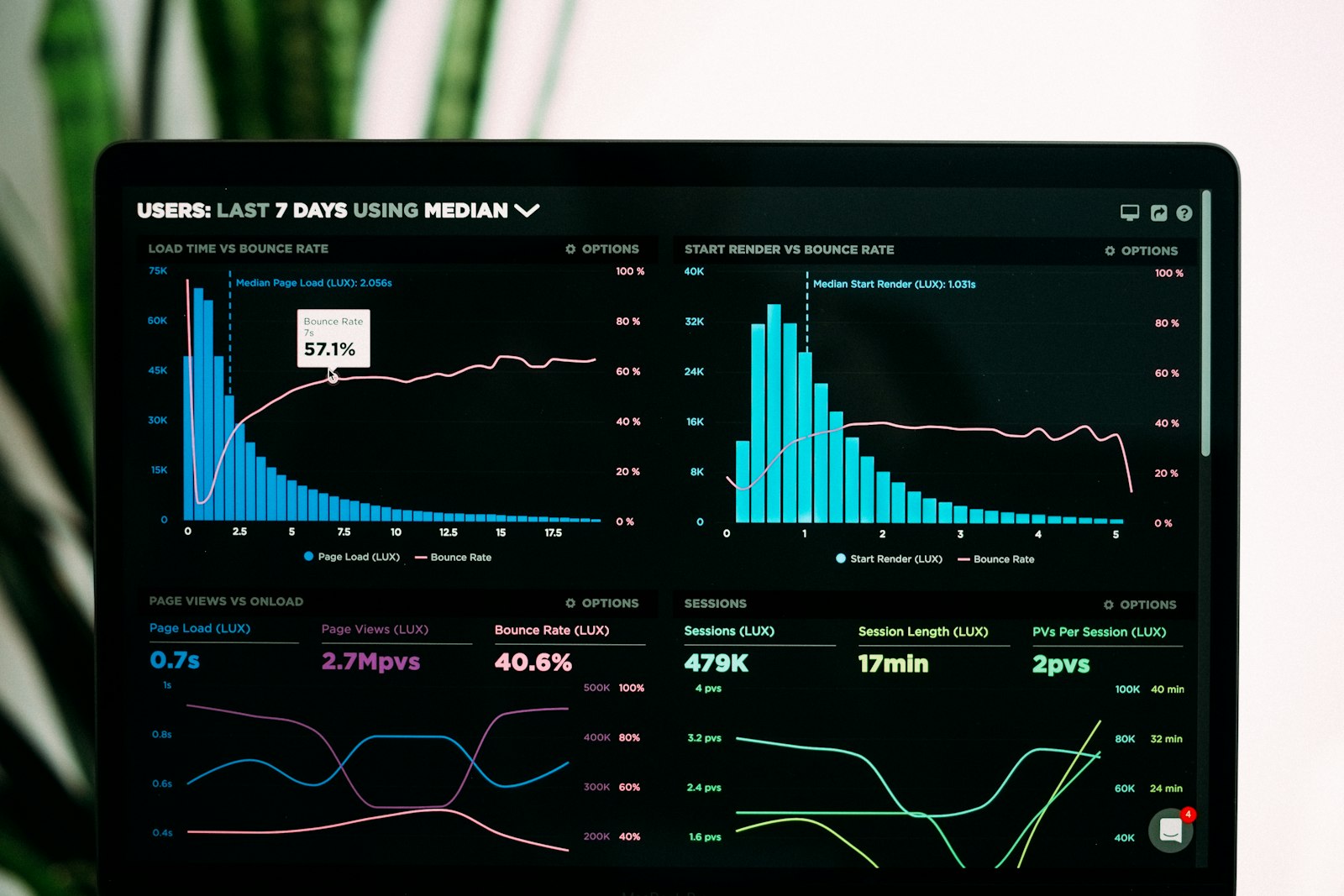
- Posting on autopilot for 12 weeks. Batching is not abdication. Pull the dashboard every Friday and adjust week N+1 based on what worked in week N.
- Re-doing the prompt library every quarter. The library is an asset. Edit it, do not rebuild it. Brand consistency lives inside those prompts.
- Treating the calendar as static. When a moment goes viral mid-quarter, swap one batched asset for a reactive one. The other 26 stay on schedule.
FAQ
How long does it actually take to set up the first batch?
The first quarter takes about 50 hours total because you are building the prompt library, the script templates, and the brand voice clone from scratch. Quarter two drops to 32 hours. By quarter three you are at 28 hours per quarter for 324 assets, which is roughly 5 minutes of operator time per piece of content.
Can I run this calendar with a smaller volume?
Yes. Halve everything: one short per platform per day, one carousel a week, one long-form per month. The structure of four three-week themes still holds, and the two-session rhythm still works. Do not change the structure — change the volume.
Which AI tools are non-negotiable for batched workflows?
Three tools form the spine: text-to-image for visuals, the AI video generator for short-form, and voice cloning for narration consistency. Everything else is optional. Without those three, batching collapses back into one-by-one production.
How do I handle reactive content inside a batched calendar?
Reserve one slot per week per platform as a wildcard. If nothing reactive happens, the wildcard becomes a repost of your best-performing piece from the previous week. If something does, you swap it in without disrupting the other 26 scheduled assets.
What is the right cadence for refreshing the prompt library?
Once per quarter, on day 88 of the previous quarter. Spend two hours reviewing which prompts produced the best-performing visuals, retire the weakest 20%, and add five to ten new variations. The library should evolve, not get rebuilt.
The leverage is in the structure, not the volume
The reason batched calendars beat daily-prompt calendars is not that you produce more. It is that the cognitive cost of every individual asset drops to near zero, which means the marginal asset becomes free. Once production is free, the only constraint is distribution, and that is a much better problem to have.
Block your first generation session for next Monday. Run the template. Ship the quarter. For more on turning batched assets into platform-native cuts, read how to repurpose long-form content into shorts with AI next.