

AI email personalization at 10,000 subscribers
How AI rewrote email marketing in 2026: segment-of-one personalization, Klaviyo AI, Beehiiv dynamic content, subject-line testing, and the image stack that lifts revenue per send.
The strangest stat in email marketing right now: enterprise programs that fully adopted AI subject-line generation and personalized send-time saw open rates climb 26 percent against manually written controls, and another 14 percent on top of that when send-time optimization was layered on. That compounding lift is why, by late 2026, an estimated 61 percent of enterprise email programs are using AI in at least one part of campaign creation. The marketers who are still writing one subject line, scheduling one send-time, and blasting one creative to a 10,000-person list are leaving most of their revenue on the table.
This is a working playbook for the email program that has already crossed 10,000 subscribers and is feeling the personalization wall. The plays below are what actually moves open rate, click-through, and revenue per recipient in 2026, drawn from how Klaviyo, Beehiiv, Customer.io, and Substack operators are running their stacks today.

How AI changed email marketing in 2025-2026
The old email playbook was: build a segment, write one creative, A/B test the subject line on 10 percent, send the winner to the rest. That playbook is now obsolete at any list size above roughly 5,000 subscribers, for three reasons.
First, Apple Mail Privacy Protection and the second wave of inbox-provider AI filtering broke the old open-rate signal. The 22-percent benchmark that anchored email strategy in 2023 is no longer a reliable target. What replaced it is engagement-quality signals: click-through rate, reply rate, downstream revenue per recipient, and unsubscribe likelihood scored per send.
Second, the cost of generating creative variants collapsed. In 2024, producing five subject-line variants and five hero-image variants for a single campaign was a half-day of work. In 2026, it is a 90-second prompt inside Versely's text-to-image tool plus a Klaviyo AI subject-line batch. The economics of multivariate testing inverted: it is now cheaper to test ten variants than to argue about which one is best.
Third, the agentic layer arrived. Customer.io now ships its platform as "built for agents, not just humans," with MCP, CLI, and webhook access that lets Claude or Cursor configure segments, triggers, and content from a single prompt. That changes what a marketing operator does day-to-day: less manual segment-building, more prompt-engineering and creative direction.
The combined effect: AI implementations are delivering roughly 13 percent higher click-through rates and 41 percent revenue lifts from personalization in retail email programs, according to 2026 benchmarks.
5 AI plays that lift open rate, CTR, and revenue
These are the five plays that have shown up most consistently in 2026 case studies. None of them require a data science team. All of them assume you have a list of 10,000+ subscribers with at least 60 days of behavioral history.
Play 1: AI subject-line multivariate testing. Generate 8 to 10 subject-line variants per campaign with your platform's AI (Klaviyo AI, Beehiiv, or a standalone LLM). Send each variant to a 500-subscriber holdout, then send the winner to the remainder. Brands with previously-optimized subject lines see a 35 percent open-rate lift from this alone; brands with weaker baselines see up to 95 percent improvement.
Play 2: Personalized send-time per recipient. Klaviyo's Personalized Send Time identifies the individual window when each subscriber is most likely to open. Top-performing campaigns using it see a 35 percent lift in click rate. This is not the old "best day to send" heuristic. It is per-recipient timing, recalculated continuously.
Play 3: Predictive audience suppression. Klaviyo Audience Optimization scores every recipient's unsubscribe likelihood in real time and suppresses the high-risk segment from each campaign. The math: protecting deliverability by sending less to disengaging subscribers raises inbox placement for the rest of the list, which lifts open rate across the board.
Play 4: AI-generated hero images per segment. Instead of one hero image per campaign, generate 3 to 5 hero variants targeted to behavioral segments (recent browsers, repeat buyers, churning customers). Cost per image with Versely text-to-image is cents; lift on segment-relevant creative is typically 10 to 20 percent on click-through.
Play 5: Dynamic content blocks driven by recent behavior. Beehiiv's Dynamic Content tailors what readers see based on location, interests, and subscription tier. Beehiiv's own team reported an 82 percent boost in email conversion rates when AI-personalized content recommendations were turned on. This is the highest-leverage play if your platform supports it.
Personalization frameworks: from segments to segment-of-one
The mental model that worked in 2022 was the segment: VIPs, new subscribers, lapsed buyers, and so on. That model still works, but in 2026 the segment is no longer the atomic unit. The atomic unit is the recipient.
The "segment of one" framework that Klaviyo and Customer.io are both pushing in 2026 looks like this:
- Recipient identity layer. Klaviyo now allows up to 5 email addresses per single profile, each with independent consent and history (generally available April 2026). This collapses the duplicate-profile problem that has been silently hurting personalization for a decade.
- Behavioral signal layer. Every browse, click, purchase, and reply is appended to the profile as a time-decayed signal. The most recent 14 days of behavior matter more than the prior 12 months.
- Predictive scoring layer. Open propensity, click propensity, churn risk, and next-best-product are all scored per recipient, per send. These scores update in near real time.
- Content rendering layer. Subject line, hero image, CTA copy, and product blocks are all chosen per recipient at render time. The platform sends one campaign; each recipient sees a different email.
The practical version for an operator: build 3 to 5 archetypes (the loyal, the lapsing, the new, the high-intent browser), generate AI creative variants tuned to each archetype, and let your ESP's predictive model assign recipients to variants at send time. You are not segment-building anymore. You are creative-direction-building.
Subject line A/B testing with AI: the 2026 protocol
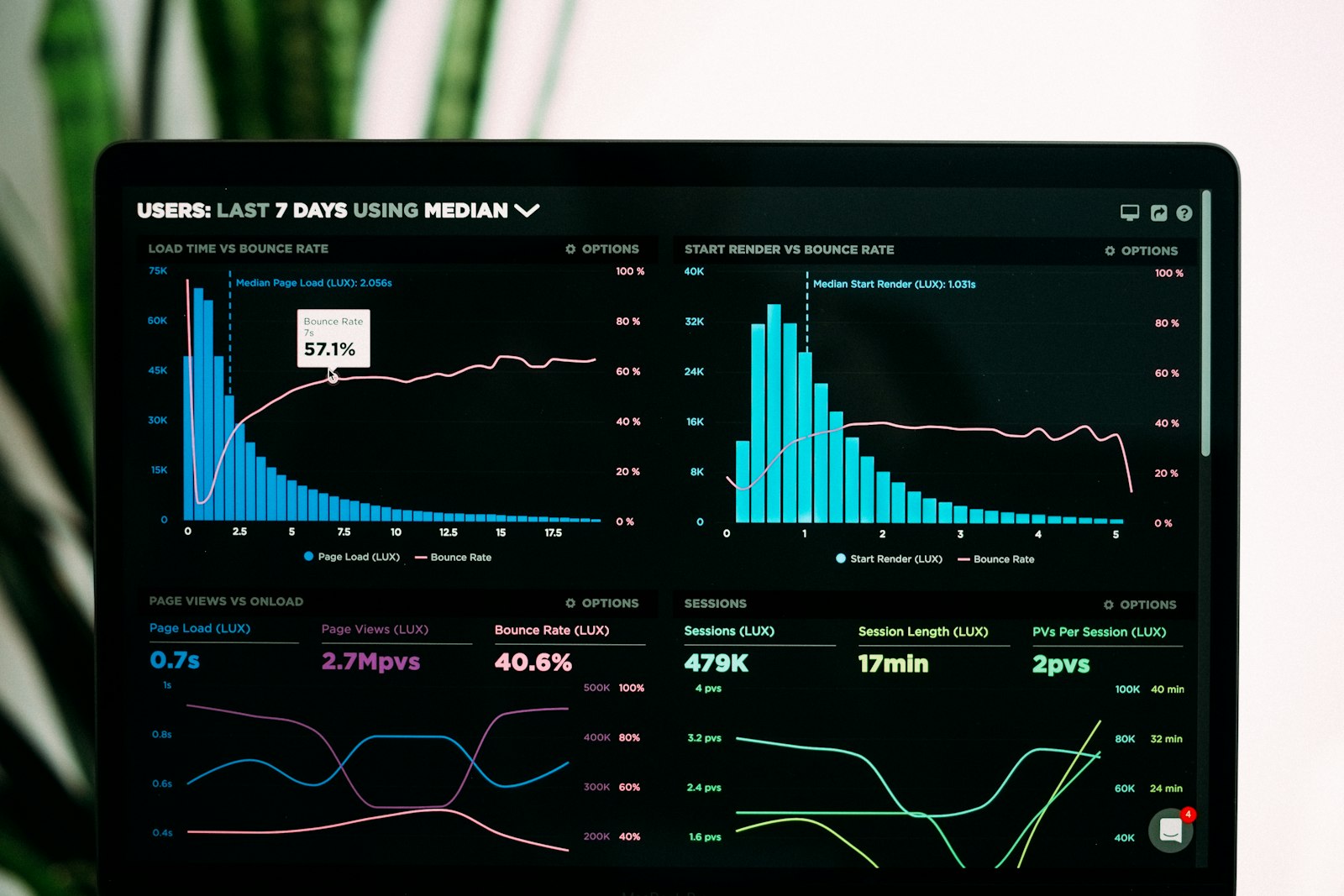
Subject lines are the highest-leverage and most-testable element of any email. The 2026 protocol for AI-assisted subject line testing is:
- Generate 8 to 10 variants in one batch. Use your platform's AI or a general-purpose LLM with this prompt frame: "Write 10 subject lines under 50 characters for [email purpose] aimed at [archetype]. Vary emotional tone across curious, urgent, playful, direct, and contrarian."
- Stay under 50 characters. Subject lines between 28 and 50 characters see 21 percent higher open rates because mobile now accounts for 68 percent of opens.
- Test with statistical floor of 1,000 recipients per variant. Anything less and the winner is noise. For a 10,000-subscriber list with 8 variants, that means a 64 percent holdout group — which is fine, you are running real multivariate, not legacy A/B.
- Score on click-through, not opens. Apple Mail Privacy Protection corrupts open-rate signal. CTR and revenue per recipient are the only metrics that survive.
- Feed the winner back as training context. Every cycle, paste the winning subject lines from the last 30 days into your next-generation prompt as examples. Your AI gets sharper at your brand voice over time.
The compounding effect: marketers running this protocol weekly for 12 weeks typically report a 1.4x to 1.8x lift in open rate versus their pre-AI baseline.
AI-generated images in email: the Versely + Klaviyo flow
The biggest underused lever in 2026 is per-campaign hero imagery. Most operators are still pulling from a stock library or recycling photoshoot assets from Q1. Meanwhile the operators winning click-through are generating fresh, segment-targeted hero images per send.
The working flow with Versely plus Klaviyo (or any modern ESP):
- Draft the campaign concept and identify the 3 to 5 segments you want to render against. Example: "spring sale, $79 AOV product, segments are: lapsed buyers, recent browsers, new subscribers, VIPs."
- Generate hero image variants in Versely text-to-image. One prompt per segment, tuned for the emotional tone of that audience. Lapsed buyers get warmth and re-welcome cues; recent browsers get the product hero close-up; new subscribers get aspirational lifestyle.
- Upload all variants to Klaviyo's image library with clear naming. Tag each by segment.
- Use dynamic content blocks to route the right image per recipient. Klaviyo's recipient-level personalization picks the image at render time based on the recipient's archetype tag.
- For animated hero blocks, use Versely's image-to-video tool to generate a 2-second loop from the same hero image. Embed as a GIF (most ESPs render the first frame in clients that block animation, so the still hero still works as a fallback).
The cost: roughly 30 minutes of operator time per campaign for the full 5-variant set. The lift: 10 to 20 percent on segment-relevant click-through, sometimes higher on lapsed-buyer flows.
For a deeper dive on the prompting frameworks behind these images, the AI prompt engineering guide for image generation walks through the variable-based prompts that keep brand consistency across many variants.
Lifecycle automation with AI agents
The 2026 lifecycle program is no longer "welcome series, browse abandon, cart abandon, win-back." It is an agentic system that constructs flows from a prompt and rebuilds them weekly based on what worked.
Customer.io's agentic stack is the canonical example: a marketer types "build a 7-touch nurture for trial users who haven't activated, with a free demo CTA on touch 4," and the platform configures triggers, content, timing, and branching logic end-to-end. The marketer reviews and edits, then ships. What used to be a half-day flow-builder session is now 20 minutes including QA.
The new lifecycle flow types worth building in 2026:
- Predictive churn flow. Trigger when churn risk crosses a threshold; send a re-engagement series with offer escalation.
- Next-best-product flow. Trigger 7 to 14 days post-purchase; AI selects the highest-conversion next product per recipient (Klaviyo's next-best-product now extends across SMS, push, and WhatsApp).
- Behavioral browse-to-buy flow. Trigger on 3+ product views in 48 hours without a purchase; send an AI-generated hero of the most-viewed product with a single CTA.
- Reply-trigger flow. Trigger when a subscriber replies to any campaign; route to a human (or an LLM with guardrails) for a personal-feeling response. Reply rate is increasingly the new open rate as the deliverability signal that inbox providers actually weight.
The mental shift: stop thinking of lifecycle as discrete flows. Think of it as a continuously-running set of agents, each with a job-to-be-done, that the platform orchestrates per recipient.
Top AI email tools compared
Quick read on the four platforms most often cited in 2026 operator stacks:
- Klaviyo — Strongest for B2C and ecommerce. Built-in AI for subject lines, layouts, send-time, audience optimization, and next-best-product. Best choice if you need predictive scoring out of the box and run a multi-channel program (email + SMS + push + WhatsApp).
- Customer.io — Strongest agentic positioning. MCP, CLI, and webhook access for Claude, Cursor, and other AI assistants. Best choice if your team is technical and wants to build flows by prompt rather than UI.
- Beehiiv — Strongest for newsletter operators and creator businesses. AI newsletter generator, AI image generation in the editor, Dynamic Content for segment-aware rendering, and built-in translation for international subscribers. Beehiiv's own internal data showed an 82 percent conversion lift from AI-personalized recommendations.
- Substack — Cautious on AI by design. Top Substack writers are still ~90 percent human-authored. AI tools like Newsletter Compass exist for the growth layer (subject lines, archive repurposing, SEO), but the platform's value proposition leans hard into authentic voice. Choose Substack if your differentiation is the human perspective itself.
The honest take: there is no single right platform in 2026. Pick based on business model. Ecommerce goes Klaviyo. Technical team with custom data goes Customer.io. Creator and media business goes Beehiiv. Personal-brand-led writing goes Substack.
The Versely angle: image and video assets for email at scale
Where Versely fits in the email stack is upstream of the ESP: the asset layer. The 2026 problem is not "I need a better email platform." Klaviyo, Beehiiv, and Customer.io are excellent. The problem is "I need 40 fresh hero images, 8 product-loop videos, and 5 talking-head intros per month, and I do not have a designer."
The working pattern for a 10,000-subscriber list shipping 8 to 12 campaigns per month:
- Hero images per campaign and per segment via text-to-image. One operator, 30 minutes per campaign, 5 segment variants.
- 2 to 4 second hero loops via image-to-video for ESPs that support animated hero blocks.
- Talking-head intro videos via Versely UGC video generator for lifecycle flows like welcome series and win-back. Embedded as a thumbnail-with-play-button image that links out to a hosted video.
- Background-removed product cutouts via AI background removal for clean product hero treatments without a photoshoot.
- Voiceover-driven product reveals via AI voice cloning for branded short clips that match your founder's voice across every send.
For ideas on how the same assets repurpose across email and other channels, the AI content repurposing guide covers the end-to-end pipeline from one piece of source content to email, video, and social derivatives.
Frequently asked questions
1. How big does my list need to be before AI personalization is worth it? Roughly 5,000 active subscribers is the practical floor. Below that, you do not have enough behavioral signal for predictive models to score recipients accurately. Above 10,000 you start seeing meaningful revenue lift; above 50,000 the lift is the difference between a profitable program and a flat one.
2. Will AI-generated subject lines hurt my deliverability? No, provided you stay under 50 characters, avoid spam-trigger phrases, and continue to monitor your sender reputation. The deliverability risk comes from sending more email to disengaged subscribers, not from how the subject line was authored. Predictive suppression (Klaviyo Audience Optimization) is what protects deliverability in 2026.
3. Do AI-generated images get flagged by inbox providers? Not currently. Gmail, Apple Mail, and Outlook all render AI-generated images normally. The reputational risk is brand-side: if your images look generic and obviously AI, subscribers tune them out. The fix is locking a visual style (color palette, composition, lighting) and prompting against that style consistently — same advice as for newsletter covers.
4. Should I use the AI built into my ESP or a general-purpose LLM? Both, with different jobs. Use your ESP's AI for in-context tasks where it has data access: subject-line generation against historical open rates, audience scoring, send-time prediction. Use a general-purpose LLM (Claude, ChatGPT) for creative direction work where you want a wider variant space: campaign concepting, hero-image prompts, long-form email body copy.
5. What's the single highest-ROI play if I can only do one thing? For most operators, it is AI-generated multivariate subject line testing with personalized send-time on top. The combined lift is typically 30 to 50 percent on open rate within 8 to 12 weeks. Everything else (predictive suppression, dynamic content, agentic lifecycle) is additive but slower-burning.
Where to start
If you are managing a list above 10,000 and have not yet flipped on AI subject-line generation, personalized send-time, and audience optimization, those three switches inside your existing ESP are the first 30 minutes of work that will define your next quarter. Generate 8 subject-line variants for your next send. Turn on personalized send-time. Suppress the top 5 percent unsubscribe-risk.
Then, in parallel, get the asset layer right. The operators winning email in 2026 are not running better campaigns at the same creative quality. They are running the same campaigns at 5x the creative variety, generated on demand. Start with Versely's text-to-image for hero images per campaign, layer in image-to-video for animated heroes, and build the lifecycle talking-heads with UGC video generator.
The 10,000-subscriber wall is real, and it is an asset-supply problem more than a platform problem. Fix the supply and personalization at scale gets a lot less scary.