

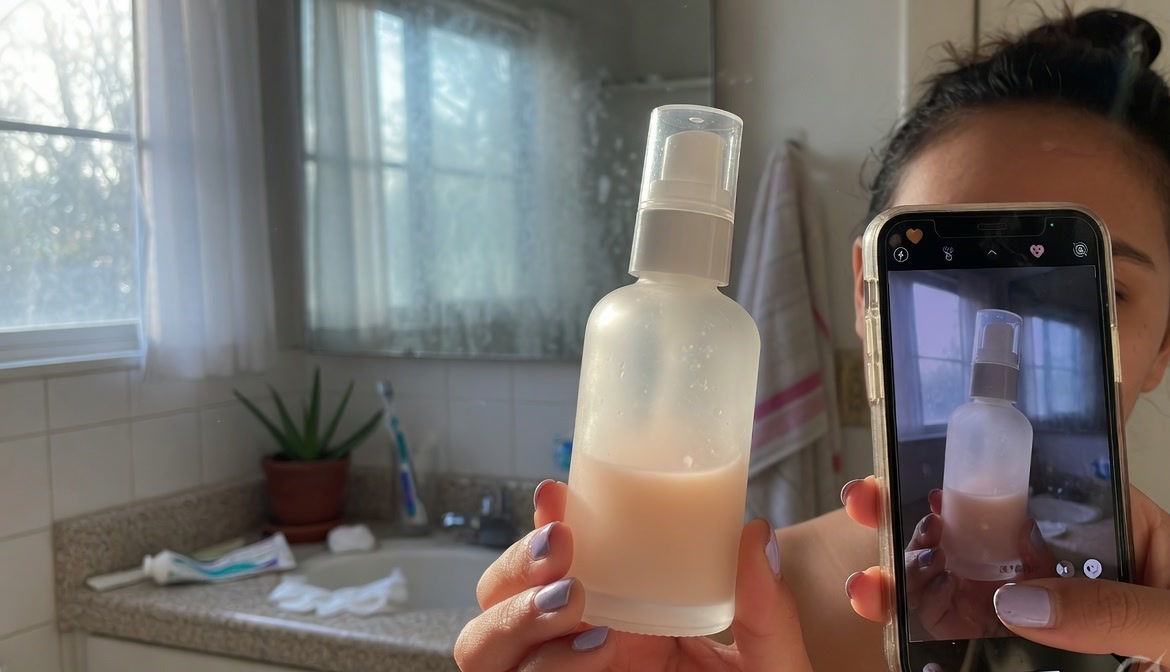
UGC meaning: content made by a customer or creator, not the brand — and in 2026 that label also covers paid UGC-style ads. UGC vs brand content is a trust split, not a camera split. Brand content is art-directed: the company decides the claim, the lighting and the cut. UGC is (or is built to look like) a peer speaking. That is why a 2026 compilation of marketer surveys still puts the gap in performance, not in production value: ads with UGC get about 4× the click-through rate and about 50% lower cost-per-click than brand film; 86% of brands say UGC lifts ad performance; 92% of consumers trust a peer recommendation over a brand message (Kapwing, 41 UGC statistics for marketers and creators 2026; Billo, UGC statistics). The original meaning still holds — a photo of a purchase, a review nobody asked for — and that unprompted half is what the paid half is trying to borrow.
UGC vs influencer is a deliverable split. An influencer sells access to an audience: the post goes on their account. A UGC creator sells the footage, delivered to the brand to post, run as an ad, or cut into a landing page, with no requirement to publish it themselves. Usage rights are usually broader because reuse is the point. The creator population in this job grew 93% year on year; 66% of creators now offer UGC services. 87% of brands say they use UGC, and only 16% have a strategy for it (Kapwing 2026; creator.co, AI UGC). That last pair is the operational problem: the format is bought as a vibe and then starved of briefs, rights and a testing cadence.
AI UGC is the third fork, not a synonym. 48% of UGC platforms launched 2023–25 are AI-native (archive.com, UGC automation trends). Human UGC still rates 81% on authenticity against 63% for AI UGC in the same research stack. Real creators win when the product has to be handled, the claim is specific, or the audience already knows the face. AI UGC wins on volume, language variants and tests you would not hire a person to shoot thirty times. Calling the generated cut 'UGC' without the 'AI' or 'style' qualifier is the disclosure problem: paid and synthetic work still needs the label the unprompted review does not.
On Versely the format is assembled rather than wished into one generate: a talking-head or avatar plate, product b-roll, burned-in captions, a hook pack of openings. The UGC video generator is that assembly. The glossary pages for UGC ad, UGC creator and AI UGC are the three forks this definition just named; this page is only the word.
In practice
- Write 'real UGC', 'UGC-style' or 'AI UGC' in the brief — 'UGC' alone no longer names a single product.
- Buy a UGC creator for the file, an influencer for the audience; mixing the two in one SOW is how rights and posting get argued later.
- If the cut is generated or a paid creator shot it, disclosure applies. An unprompted customer review is the one case that does not start as an ad.
The mistake to avoid
Calling paid or generated work 'UGC' as if that made it organic. The trust is borrowed from the unprompted half; the label and the contract have to say which half you actually made.
Go deeper
What is UGC, including AI-generated UGC
UGC explained in plain English: definition, types, creator pay in 2026, AI UGC vs real UGC, FTC and EU AI Act disclosure, and a starter toolkit for brands and creators.
Where you will run into it
- AI UGC Video Generator — UGC ads at the speed and price of a prompt.
- AI Caption Generator — Drop a video, get timed captions. Free, on your device, no upload.
Related terms
UGC ad
UGC ad meaning: an advert made to look like a peer post (handheld, to camera) so it reads as a recommendation, not a commercial.
UGC creator
UGC creator meaning: a contractor paid to shoot UGC-style content for brand use, with no requirement to post on their own account.
AI UGC
AI UGC meaning: brand-owned feed-native video generated to look like a person talking to camera about a product, not a real customer post.
Gifting campaign
A gifting campaign sends free product to creators with no cash fee and usually no contractual guarantee of a post, trading the product itself for a chance at organic coverage.
Seeding
Seeding is placing finished content into communities — subreddits, Discord servers, group chats — as a genuine contribution rather than an ad, so it earns distribution before or without any paid push.
The all-in-one AI studio for creators. 60+ models for video, image, voice, music and lipsync — in your browser or on your phone.
Free account. Works in your browser - no install needed. The same account signs in on your phone.