

Turn one podcast episode into 30 AI shorts
The 2026 AI workflow that turns a 60-minute podcast into 30 scroll-stopping vertical clips — tool comparison, captioning rules, reframe science and the posting cadence that actually drives subscribers.

In 2026, the most reliable way to grow a podcast is no longer the podcast. It is the 30 vertical clips you carve out of every episode and ship to TikTok, Reels, Shorts and LinkedIn before the long-form even drops. Clipped highlights now drive somewhere between 20% and 60% of new listener acquisition for video-friendly shows, and short clips under 30 seconds pull roughly 2.5x the engagement of any other podcast asset on TikTok. Video podcasts are growing 2-3x faster than audio-only shows, and the gap is almost entirely a clip-distribution gap.
This guide is the practical workflow we use and recommend in 2026 — the tools that actually ship 30 publish-ready clips per episode, the captioning and reframing rules that separate clips that retain from clips that get scrolled, and the posting cadence that compounds into a self-feeding subscriber funnel.
Why clip creation is still the bottleneck
Most podcasters know they need clips. Almost none of them produce 30 per episode. The reason is not strategy — it is labor. A 60-minute episode has somewhere between 80 and 120 potentially clippable moments. Watching the whole thing back, marking timecodes, exporting, reframing to 9:16, captioning, hook-testing the first frame, writing the post copy and scheduling across four platforms takes a human editor 8-12 hours. At an agency rate that is $600-$1,200 of labor per episode. Solo podcasters either skip it, ship five lazy clips, or burn out by month three.
AI clipping changes the unit economics. The same 30-clip output now costs $15-$60 in tool fees and 90 minutes of human review. That is the entire reason podcast clip channels — JRE Clips, Diary of a CEO shorts, Lex Fridman highlights — have quietly become some of the largest media properties of the decade. The format that Joe Rogan's studio normalized in 2020 (single guest, dark backdrop, broadcast mic, locked camera) is now the default visual grammar of short-form podcast video, and the AI tools have been trained on millions of clips that match that grammar.
If you are not shipping 20-30 clips per episode in 2026, you are not under-marketing your podcast. You are giving away the channel.
The 30-clip-per-episode workflow
The target is 30 distribution-ready clips per 60-minute episode. Not 30 maybe-clips waiting for review — 30 captioned, reframed, hook-tested, copy-written assets queued in your scheduler.
Here is the seven-step pipeline that hits that target reliably.
- Upload the raw episode to your AI clipping tool of choice with the multi-cam horizontal recording (host + guest in frame), not the audio-only file. Vision models need pixels to do speaker detection and reframing.
- Let the model surface 40-60 candidate moments. All the leading tools (Opus Clip, Spikes Studio, Versely, Descript, Riverside Magic Clips) over-generate on purpose so you can cull.
- Score and cull to 30. Look at the virality score, but trust the first three seconds more. If the clip does not pose a question, name a person, or land a number in the opening beat, kill it.
- Reframe to 9:16 with AI subject tracking. Static center-crops are the dead giveaway of a 2022 workflow.
- Burn word-by-word captions in the lower-third safe zone, not the dead-center default.
- Insert B-roll on the three retention dips that almost every podcast clip suffers (seconds 4-6, 12-14, and 22-25).
- Generate hook text and post copy per platform, then push to a scheduler.
End to end, with a tool that automates steps 4-7, the active editor time per episode drops from 10 hours to 60-90 minutes. That is the unlock.
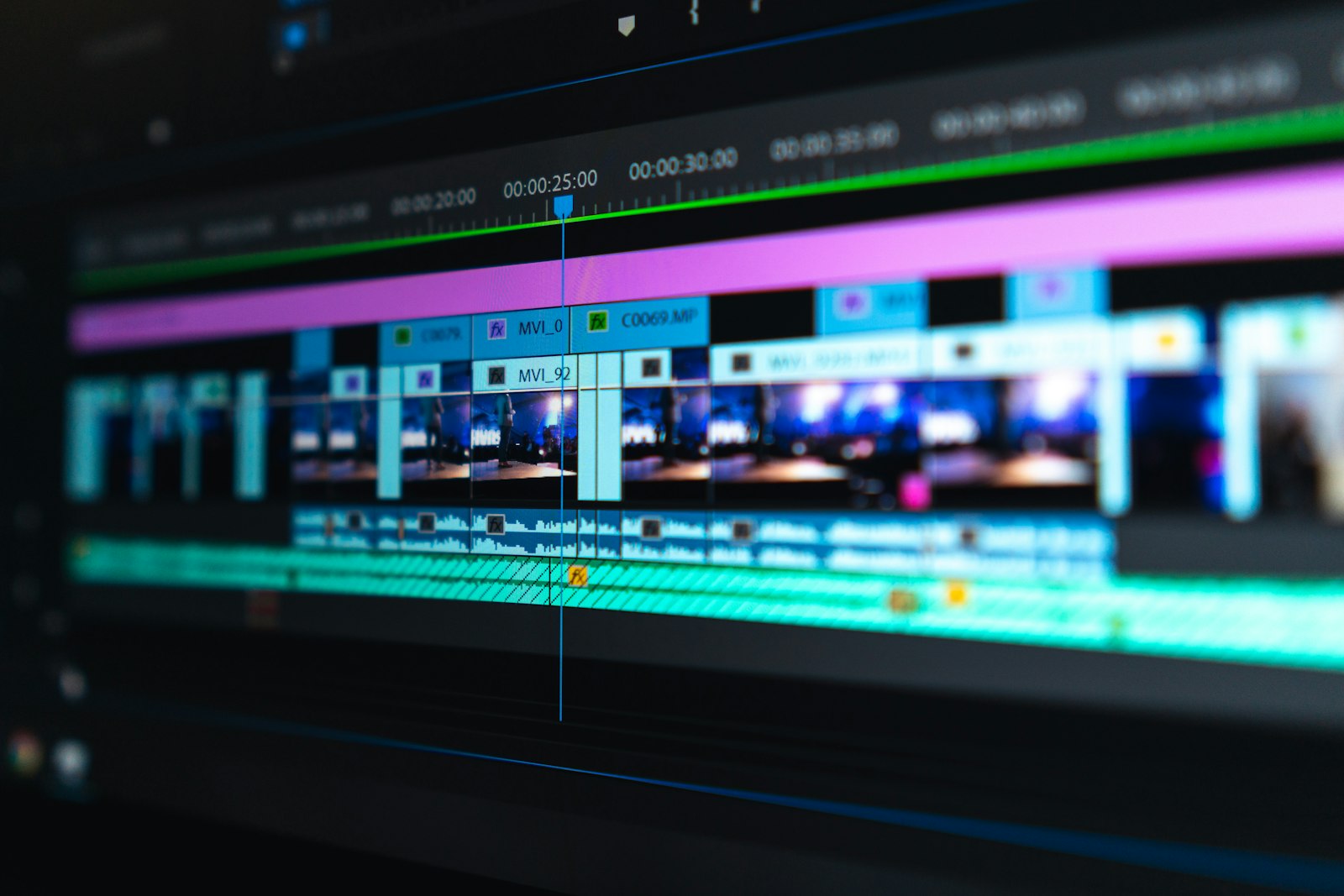
Tool comparison: Opus Clip vs Spikes Studio vs Riverside vs Versely vs Descript
The clipping tool market consolidated hard in 2025. Five products are doing >80% of the work podcasters actually ship. Here is how they actually compare in mid-2026.
Opus Clip
Still the category leader by volume. The ClipAnything multimodal engine analyzes visual, audio and sentiment cues frame by frame to surface moments, and the virality score (a 0-100 rating tied to predicted engagement) is the most calibrated in the market. Auto-captions land at 97%+ accuracy. ReframeAnything tracks moving subjects so multi-guest podcasts do not lose the active speaker on a center crop. Where Opus falls short: B-roll insertion is generic, custom branding requires the higher tier, and the credit system gets expensive past four episodes per month.
Spikes Studio
Purpose-built for Twitch and YouTube gaming streams — its highlight-detection model is tuned for kills, clutch moments and chat spike events, not interview cadence. If you run a gaming or live-streaming podcast it is the better fit. For a sit-down conversation show, the other tools surface more interview-shaped moments.
Riverside Magic Clips
Riverside's clipping is best understood as a value-add to the recording platform, not a standalone clipper. Magic Clips is now on the free plan, runs on anything you record inside Riverside, and is genuinely good at single-speaker moments. Limitations: it works primarily on Riverside-captured footage, the editing UI is intentionally minimal, and you cannot easily round-trip into a more capable editor.
Descript
The text-first option. Descript's Underlord agent auto-generates 3-5 vertical clips per session with layouts, captions and B-roll. Because the whole editor is transcript-driven, podcasters who think in words rather than timelines tend to be 2-3x faster here than in a traditional NLE. The trade-off is volume — out of the box, Descript wants to produce a handful of polished clips, not a batch of 30. You can push it to 30 with manual selection, but the workflow fights you.
Versely
Versely's angle is pipeline coverage, not clip detection alone. The clipping itself is competitive but the real win is that the same project moves into video-to-shorts reframing, AI captions for word-by-word burn-in, the AI B-roll generator for retention inserts and the AI video generator for hook frames — all in one workspace with one credit pool. For creators producing across multiple shows or repurposing clips into TikTok, Reels and YouTube Shorts variants, the per-clip cost lands lower than running Opus + a separate captions tool + a separate B-roll source.
The honest summary: Opus has the best raw clip detection, Descript has the best text-based editing, Riverside is the best free option if you already record there, and Versely wins when the workflow extends past the clip itself into captioning, B-roll and platform-specific cutdowns. Most serious podcast clip channels in 2026 use two tools — one for detection, one for assembly.
Auto-captioning best practices
Auto-captions are the single highest-leverage post-clip edit you make. Roughly 85% of social audio plays muted. If the captions are wrong, late, or visually buried, the clip is dead before the hook lands.
Five rules we apply to every clip:
- Word-by-word, not line-by-line. Karaoke-style highlights one word at a time, color-shifted as it is spoken. Line-by-line captions force the eye to read ahead of the audio, which kills the moment of revelation that makes a clip work.
- Lower-third, not dead-center. The center of the frame is reserved for the speaker's face. Captions in the lower third (roughly 60-75% down the frame) keep the eye-line clean and survive TikTok's UI chrome on the right edge.
- Brand font, not the default sans-serif. Every podcast clip channel that has scaled past 100k followers — JRE Clips, Diary of a CEO, Modern Wisdom — has a recognizable caption style. Pick a font and a highlight color, and ship every clip with that exact treatment. Recognizability compounds.
- Manual proofread on names and numbers. AI transcription is 97% accurate on common English but unreliable on proper nouns, technical terms and any number above three digits. A 60-second proofread per clip is non-negotiable.
- Punctuation light, not heavy. Commas and periods slow the read. Strip everything except question marks and ellipses, which create rhythm.
Versely's AI captions workflow handles the first three by default and lets you save brand presets across episodes. Whatever tool you use, get the preset locked once and never re-decide.

Vertical reframing for TikTok, Reels and Shorts
Roughly 85% of the top 100 YouTube Shorts channels shoot natively vertical. Podcasters do not have that luxury — the multi-cam interview rig is horizontal by design. The reframing job is therefore non-trivial: a 16:9 source has to become 9:16 without losing the active speaker, without dead empty space, and without the cheap "blurred background filler" look that signals low effort.
Two technical approaches dominate in 2026:
AI subject tracking. The model identifies the active speaker by combining voice activity detection with face detection, then dynamically repositions the 9:16 crop window to keep them centered. When the conversation switches to the guest, the crop pans. This is far better than a static center crop because it follows the action — interviews and podcasts are a natural fit for this technique because the visual priority is almost always "keep the active speaker in frame." Opus's ReframeAnything, Descript's smart reframe, and Versely's video-to-shorts all implement this.
Split-screen 9:16. Stack two speakers vertically — host on top, guest on bottom — both at 16:9 letterboxed. This works surprisingly well for two-person interviews because viewers can read facial reactions in real time. Most clipping tools now offer this as a one-click template. Use it for clips where the reaction shot carries more weight than the words.
The technical baseline: render at 1080 x 1920 minimum, 4K (2160 x 3840) if your source supports it. Anything lower compresses badly on Reels.
B-roll insertion for retention
Word-only podcast clips lose retention at predictable points. Aggregate retention curves across thousands of clipped podcast shorts show three near-universal dips:
- Seconds 4-6: the post-hook attention test. If the viewer has not committed by here, the auto-scroll fires.
- Seconds 12-14: the patience check. The hook has been validated; the viewer is asking "is this going somewhere?"
- Seconds 22-25: the punchline window. If the clip is going to land, it lands here.
Inserting one B-roll cutaway at each dip — a screen recording, a graphic, a meme, archival footage, anything that breaks the talking-head frame for 1-2 seconds — measurably lifts watch-time. Spike-test on 10 clips and you will see it.
Sourcing the B-roll used to be the bottleneck. In 2026, it is not. Generate scene-matched cutaways on demand in the AI B-roll generator: if the guest is talking about Tesla earnings, you need a stock-ticker shot, not a generic skyline. If they are talking about their daughter, you need a soft-focus hand-holding shot, not a sunset. Specific beats specific. Generate three to five seconds per insert, never more.
The one trap to avoid: do not insert B-roll on the hook (seconds 0-3) or on the punchline itself. The face carries those moments. B-roll is a bridge, not a destination.
Posting strategy: when, where, how often
Thirty clips per episode is not a "post all 30 on Wednesday" pile. It is two weeks of distribution fuel. Here is the cadence that compounds.
Cross-platform allocation. Every clip gets posted natively to four platforms minimum: TikTok, Instagram Reels, YouTube Shorts and LinkedIn. Native upload, not cross-share — each platform's algorithm penalizes detected re-uploads from competitors. The same 30 clips therefore become 120 native posts. Add Twitter/X video posts and Threads and you are at 180.
Timing. TikTok and Reels skew evening (6-10pm local time for the target audience). YouTube Shorts skews lunch (12-2pm) and late evening (9-11pm). LinkedIn is morning (7-9am) and lunch (12-1pm). Do not post all platforms at the same time — pick the window per platform.
Frequency. Three to five clips per day across the network is the floor. More than five and you cannibalize your own reach. Spread 30 clips across 10-14 days so the episode's distribution tail extends past the next episode drop.
Variant testing. Take the three clips that look strongest on first pass and ship two variants of each — different hook text, different first frame, different caption highlight color. Whichever variant overperforms on day one gets promoted to LinkedIn and YouTube Shorts. The other gets archived.
Anti-fatigue rotation. Never post two clips with the same guest back-to-back on the same platform. Stagger by topic. Algorithms are now sophisticated enough to detect "same speaker, same setting" and suppress the second post if it lands inside the same 24 hours.
The compounding effect is real. A channel posting 30 clips per episode for 12 weeks straight has shipped 360 native shorts and tested 90 hook variants. That is enough data to learn what your audience actually clicks on, which then feeds back into the episode-level question selection. Clip data becomes editorial direction.
Where Versely fits
The Versely angle on podcast clipping is workflow coverage, not single-feature dominance. The thesis: most podcasters end up running three to five tools to ship clips — one for detection, one for reframing, one for captions, one for B-roll, one for scheduling — and the tool-switching tax eats half the time savings the AI was supposed to deliver.
Inside Versely, the same episode upload moves through clip detection, video-to-shorts reframing, AI captions word-by-word burn-in, and AI B-roll generator cutaway inserts without leaving the workspace. The chat-based interface means you can say "give me 30 clips, vertical, captions in our brand preset, B-roll on every clip longer than 20 seconds, hook frame as a separate PNG" and the pipeline runs as one job. For podcasters running multiple shows or producing English + Spanish + Portuguese variants of the same clip, the consolidated credit pool drops per-clip cost below the Opus + standalone-captions + Pexels B-roll stack.
The two scenarios where Versely is the obvious choice: (1) you are repurposing across more than two platforms with platform-specific hooks and copy, and (2) you are producing more than two episodes per month and the per-clip cost is starting to matter at scale. For a single weekly show that lives only on TikTok, Opus Clip's free tier is still hard to beat.
FAQ
How many clips should I actually post per episode?
The strong floor in 2026 is 15-20 per episode. Past 30 you start hitting diminishing returns because the algorithm reads the volume as spam and suppresses reach. The 30-clip workflow described here assumes cross-posting to four platforms — so 30 clips becomes 120 posts spread over 10-14 days, which is the right cadence. For a single-platform-only strategy, 15 high-quality clips beats 30 mediocre ones.
Will AI clipping replace my human editor?
For volume work, yes — the 80% of clips that are straight talking-head moments with captions and reframe are now fully automatable. The remaining 20% (the trailer, the launch clip, the brand-defining moment) still benefit from a human editor with taste. Most growing podcasts in 2026 run an AI pipeline for the 30 clips and a human editor for the one or two anchor pieces per episode.
How accurate are AI clip detectors at picking actually-viral moments?
Better than guessing, worse than a great producer. The virality scores from Opus, Descript and Versely are calibrated on real engagement data and tend to surface the right 5-10 candidates per episode. Past the top 10, the score becomes less reliable — you should manually review the candidate pool, not blindly ship the top 30. Treat the AI score as a filter, not a verdict.
What is the right podcast recording setup if clipping is the goal?
Multi-cam, locked frames, broadcast mics in shot (the "Rogan style" works because the mics signal "this is a real conversation"), and even-not-flat lighting. Avoid moving cameras and avoid B-roll cutaways in the original recording — let the clipping tool insert those in post. The simpler your source footage, the better the AI reframe and detection.
Do I really need vertical clips if my audience is on YouTube long-form?
Yes. YouTube Shorts is where new subscribers come from in 2026, even for long-form-first creators. The retention path is: viewer sees a 30-second clip on Shorts, clicks the channel, watches a second clip, lands on the long-form episode. Cutting Shorts is the cheapest subscriber-acquisition mechanism available to a podcaster right now.
Ship 30 clips this week
The gap between the podcasts growing in 2026 and the ones that have plateaued is almost entirely a clip-distribution gap. The tools to close it are mature, the unit economics work, and the playbook is no longer secret.
Start with one episode. Run it through an AI clipping tool, target 30 clips, reframe vertically with subject tracking, burn word-by-word captions in your brand preset, insert B-roll on the retention dips, and schedule across four platforms over two weeks. Track which clips outperform, feed the data back into next episode's question selection, and let the loop compound.
When you are ready to run the whole pipeline in one workspace — detection, reframing, captions, B-roll, and per-platform variants on one credit pool — try the video-to-shorts, AI captions and AI B-roll generator tools inside Versely. If you have not built the upstream side of the funnel yet, our guides on AI tools for podcasters in 2026 and how to make an AI podcast trailer cover everything that happens before the clip job runs.
The episode is already recorded. The audience for the next 30 clips is already scrolling. Ship.
Sources
- 126 Podcast Statistics 2026 Report — talks.co — clip engagement, listener acquisition and ROI benchmarks.
- Opus Clip Review 2026 — Computertech and the OpusClip podcaster product page — ClipAnything, ReframeAnything, virality scoring and 97%+ caption accuracy.
- Vertical vs Horizontal Video for YouTube Shorts 2026 — Blitzcut and the 9:16 Aspect Ratio Guide — EdicionVideoPro — native-vertical adoption rates and reframing technique.