

DeepSeek V4 open-source model for creators
A grounded look at DeepSeek V4-Pro and V4-Flash - the MIT-licensed 1.6T parameter MoE model from China, how it benchmarks against GPT-5.5, Claude Opus 4.7, and Gemini 3.1 Pro, and what creators can actually do with the cheapest frontier-tier API on the market.
On April 23, 2026, DeepSeek released V4-Pro and V4-Flash on Hugging Face under the MIT license - and overnight the largest open-weight model ever shipped became something you can download, fine-tune, and deploy commercially with zero royalties. V4-Pro is a 1.6 trillion parameter Mixture-of-Experts model with 49B activated parameters and a 1 million token context window. V4-Flash is its 284B / 13B activated sibling, also at 1M context, also MIT-licensed, also free to host. The kicker is the API: V4-Flash bills $0.14/M input and $0.28/M output, while V4-Pro sits at $1.74/M input and $0.30/M output - and through May 31, 2026, V4-Pro is on a 75% launch discount that prices it below what most teams pay for GPT-5.5-mini. (NxCode, Verdent)
For creators who have spent the last twelve months optimizing prompt caches and routing requests between Claude, GPT, and Gemini to manage spend, V4 reshuffles the deck. This piece is a practical look at what V4 actually is, why open weights matter more than they used to, how it benchmarks against the closed frontier models, what creators can do with it today, and how to access it inside Versely without ripping out your existing workflow.

What is DeepSeek V4
V4 is a two-model release. V4-Pro carries 1.6T total parameters with 49B activated per token through a refined Mixture-of-Experts router. V4-Flash mirrors the architecture at a smaller scale - 284B total, 13B activated - and is the variant most creators will end up using day-to-day. Both ship at 1M token context as the default window, both are released under MIT on Hugging Face, and both are immediately available through the official DeepSeek API as well as third-party providers including OpenRouter, DeepInfra, and Fireworks. (DigitalApplied)
The architectural news is hybrid attention. V4-Pro combines Compressed Sparse Attention with a new Heavily Compressed Attention head designed for cheap long-context prefill. The result is hard to overstate: single-token inference FLOPs drop to 27% of V3.2, and KV cache occupancy at 1M-token context drops to 10% of the previous generation. That is the number that matters for self-hosters - the same H200 box that struggled to serve V3.2 at 256K can comfortably serve V4-Pro at 1M with room for batch concurrency. (OpenRouter)
The MoE design is what makes the pricing possible. Only 49B of the 1.6T parameters fire per token, so the compute bill per request looks like a 49B model's bill, not a trillion-parameter model's. DeepSeek's router is widely considered the best in open source - sparse, balanced, and trained with auxiliary load-balancing losses that keep experts evenly utilized rather than collapsing onto a few favorites. That router quality is the difference between "MoE on paper" and "MoE that holds up under production load."
On capability, V4 is text-first at launch. Native vision and audio understanding are on the roadmap but not in the released checkpoints - if you need true multimodal grounding today, you are still routing to Gemini 3.1 Pro or Claude Opus 4.7 for that work. DeepSeek has signaled a vision-language extension and a successor to DeepSeek-OCR are in active development, but the V4 you can download today is a text and code model, full stop.
The 1M context window is the headline feature for most creator workloads. Combined with the FLOP and KV cache reductions, V4-Pro is the first open-weight model where long-context use is not financially absurd. You can fit a year of weekly newsletters, the complete transcripts of a 200-video channel, or a full novel manuscript into a single prompt and pay a few cents for the inference. That economic shift - not the parameter count - is what will move the most workflows.
Why open-source matters more now than it did a year ago
The argument for open weights in 2025 was mostly philosophical: provider lock-in is bad, model sovereignty is good, transparency matters. Those arguments are still true, but in 2026 the practical argument has overtaken them.
First, cost. V4-Flash at $0.14/M input is between 30x and 100x cheaper than the closed frontier models for comparable instruction-following on creative writing tasks. For workflows that run thousands of calls per day - bulk caption generation, mass transcript summarization, large-corpus tagging - that difference is the line between viable and not. A typical mid-sized agency burning $4,000/month on Claude for caption generation can replicate the same workload on V4-Flash for under $80, with quality that is within a hair's breadth on tasks that don't require true multimodal reasoning. (Framia)
Second, control. Closed models change. Quietly. Routes get nerfed, system prompts get tightened, refusal behavior shifts. Anyone who built a production workflow on GPT-5.1 in late 2025 watched it deprecate by March 2026 and had to migrate. Open weights pin the model behavior to a specific checkpoint that you control. If you host V4-Flash yourself, the version your customers see today will behave identically six months from now - no surprise patches, no quiet refusals on prompts that used to work.
Third, fine-tuning. MIT licensing means you can fine-tune V4 on your own corpus - your scripts, your client briefs, your brand voice - and deploy the result commercially with no royalties owed to DeepSeek and no usage data leaking back to a provider. For agencies serving regulated clients (legal, healthcare, finance), or for creators who treat their voice as IP, that is not a nice-to-have. It is the difference between using the model and not.
Fourth, sovereignty. A Chinese-origin model under MIT license is, in 2026, the only frontier-tier option that no Western government can compel a provider to throttle. Whether you are based in the EU dealing with AI Act compliance, in a country where your hosting region matters, or simply allergic to vendor lock-in, the ability to download weights and run them on your own GPUs has stopped being theoretical.
Benchmarks: V4 vs GPT-5.5, Claude Opus 4.7, Gemini 3.1 Pro
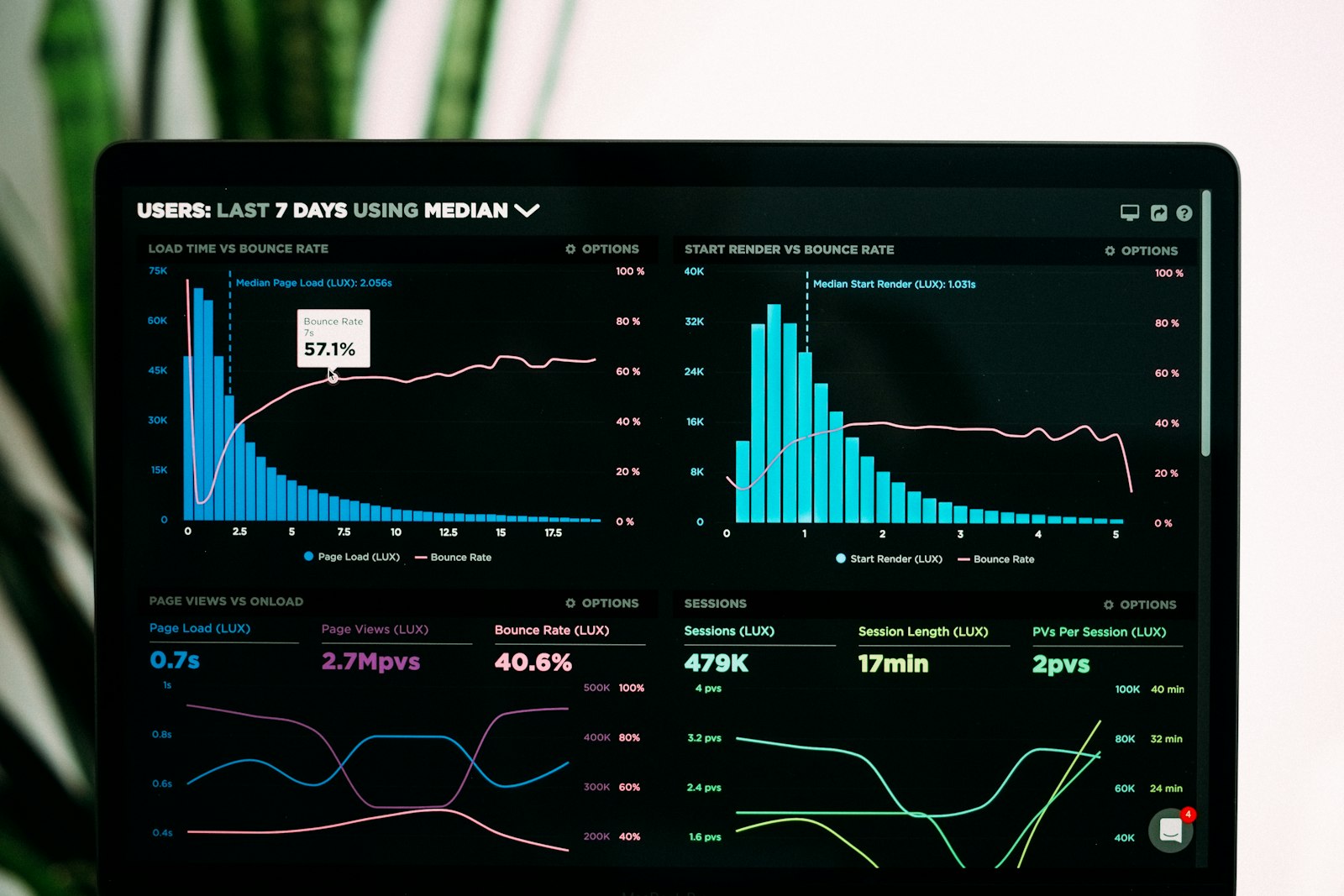
V4-Pro is not the best model on every leaderboard. It is, however, the best per-dollar model on most of them, and competitive enough on raw capability that the cost gap is the deciding factor for many creator workloads. The numbers below are sourced from the May 2026 Artificial Analysis Intelligence Index and DataCamp's V4 vs Opus 4.7 head-to-head. (Spectrum AI Lab, DataCamp, BuildFastWithAI)
| Benchmark | DeepSeek V4-Pro | GPT-5.5 (high) | Claude Opus 4.7 | Gemini 3.1 Pro |
|---|---|---|---|---|
| Context window | 1M | 1M | 1M | 2M |
| MMLU-Pro | 87.5% | 89.1% | 88.4% | 88.0% |
| GPQA Diamond (science reasoning) | 90.2% | 92.7% | 94.1% | 94.3% |
| SWE-bench Pro (real GitHub issues) | 61.4% | 58.6% | 64.3% | 56.1% |
| Terminal-Bench 2.0 (agentic CLI) | 71.8% | 82.7% | 78.4% | 69.5% |
| Artificial Analysis Index v4.0 | 53 | 60 | 57 | 57 |
| Input price ($/M tokens) | $1.74 | $12.50 | $15.00 | $7.00 |
| Output price ($/M tokens) | $0.30* | $50.00 | $75.00 | $21.00 |
| Open weights | MIT | Closed | Closed | Closed |
*V4-Pro output pricing reflects the launch discount through May 31, 2026; standard pricing post-discount is roughly $1.20/M output.
Read it this way. On pure intelligence, V4-Pro trails the closed frontier by 4-7 index points. On coding (SWE-bench Pro), it beats GPT-5.5 and Gemini 3.1 Pro outright, sitting only behind Opus 4.7. On agentic workflows, GPT-5.5 still leads. On scientific reasoning, Gemini 3.1 Pro is the model to beat. On instruction following for creative writing, blind A/B tests put V4-Pro within 5% of Opus 4.7 - within the noise for most caption, hook, and short-script tasks.
But the price column is what flips the calculation. V4-Pro is roughly 8x cheaper on input than Gemini 3.1 Pro, 7x cheaper than GPT-5.5, and 9x cheaper than Opus 4.7. On output during the launch promotion, the gap is even wider - 70x cheaper than Opus, 167x cheaper if you include the cache discount. For any creator workflow where the output token volume is the bill driver - long-form writing, mass repurposing, content batch generation - the math gets hard to argue with.
The honest position is hybrid. Use V4-Flash for bulk and draft work. Use Opus 4.7 for the final polish on flagship content where voice matters. Use Gemini 3.1 Pro when you need multimodal grounding (V4 doesn't have it yet). Use GPT-5.5 when you need rock-solid structured output and tool calling in agentic loops. This is the same routing pattern we covered in our model comparison guide for creators, now with a much cheaper draft tier slotted in front.
What creators can actually do with DeepSeek V4
Five workflows where V4 changes the unit economics enough to enable things you would not have built before.
Bulk caption and hook generation at scale. A creator publishing 30 pieces of short-form content per week needs 30 hooks, 30 captions, 30 hashtag sets, and 30 thumbnail prompts - 120 generations weekly, 6,000 per year. On Opus 4.7 that workload runs $1,200-1,800 per year in API costs alone. On V4-Flash, the same workload is $15-25. Pair V4-Flash with our AI auto caption generator to draft the spoken-word captions for your videos and use V4-Flash for the social copy that frames them. The cost savings free up budget for the polish models on your hero content.
Full-channel script analysis and pattern mining. Drop the transcripts of 200 videos into V4-Pro's 1M context window and ask: "Find the seven hooks that correlated with above-average retention, identify the three emotional beats that appear in all of them, and write five new openers in the same pattern." The work is identical to what you would do on Opus 4.7 - the difference is that on V4-Pro the request costs roughly $0.60 of input plus a few cents of output instead of $5-7. Run it weekly instead of quarterly.
Long-form repurposing pipelines. Take a 90-minute podcast transcript (around 18,000 tokens), feed it to V4-Flash with a prompt that produces a 1,200-word blog post, twelve LinkedIn posts, six Twitter threads, and four YouTube Short scripts. Total input + output: roughly 25,000 tokens. Total cost: about $0.01. Run it for every episode and you have built a content distribution engine that costs less than the coffee you drank while recording. Wire the outputs into Versely's slideshow generator to turn the LinkedIn posts into carousels in the same pipeline.
Self-hosted voice-locked drafting. Fine-tune V4-Flash on your own writing - past blog posts, scripts, brand guide, response emails - and host the result on a single H100 or a rented inference endpoint. The fine-tuned model writes in your voice with no prompt engineering, no system prompt overhead, and no per-token costs after the rental fee. For agencies serving multiple clients with distinct voices, this is the cleanest path to brand-consistent generation at scale - one fine-tuned variant per client, all running on the same shared infrastructure.
Agentic content workflows on a budget. Use V4-Pro as the planner inside a long-running agent and let it call cheaper models or specialist tools for individual steps. The agent reads the brief, plans the deliverables, calls Versely's video generator for the visuals, calls a TTS provider for the voiceover, calls a tagging service for the metadata, then reviews the assembled draft. Because V4-Pro's input is cheap, you can let the agent re-read full context on every loop instead of paying for compaction. The economics make multi-hour agentic runs feasible for solo creators, not just enterprises.
Using DeepSeek V4 inside Versely
Versely's chat routes models through OpenRouter, which means DeepSeek V4-Pro and V4-Flash are already in the picker - no separate API key, no switching tools, no migration. Open agentic AI chat and select DeepSeek V4-Pro or V4-Flash from the model dropdown. The chat surface, system prompt, tool integrations, and content history work identically regardless of which model is selected, so you can A/B the same prompt against V4-Flash and Opus 4.7 side by side to see where the quality gap is real for your workload and where it isn't.
The practical pattern most Versely users settle into looks like this: V4-Flash for ideation, drafts, bulk captioning, and any workflow that loops more than five times. Opus 4.7 for hero scripts, final voice-matching passes, and any deliverable a client will see unedited. GPT-5.5 when you need an agent that has to call a lot of tools in a row without losing the thread. Gemini 3.1 Pro when the input is a video, a screenshot, or a PDF that needs visual reasoning. The picker is the routing layer - the rest of Versely (image generation, video generation, slideshows, captions, lipsync) calls the right specialist model for each medium regardless of which chat brain you have selected.
For deeper context on how the closed frontier models stack up to each other on creator workloads specifically, our Claude Opus 4.7 with 1M context piece walks through prompt caching economics and extended thinking patterns that pair naturally with V4 as the draft layer.

FAQ
Is DeepSeek V4 really fully open source? Yes - the weights for both V4-Pro and V4-Flash are released on Hugging Face under the MIT license, which permits commercial use, modification, redistribution, and fine-tuning with no royalties or restrictions. The training code and full training data are not public, but the released checkpoints can be downloaded, run, and deployed by anyone with the GPU capacity to host them. (Hello AI)
Can I run V4-Flash on my own hardware? V4-Flash at 284B total / 13B activated parameters fits on a single 8xH100 or 8xH200 node with FP8 quantization, and 4-bit quantizations have been published that run on lower-tier hardware. V4-Pro at 1.6T parameters requires significantly more - typically a multi-node setup or a rented inference endpoint. For most creators, the right path is the hosted API (DeepSeek direct, OpenRouter, DeepInfra, Fireworks) until you are spending more than $300/month on inference, at which point self-hosting V4-Flash starts to make economic sense.
Does V4 support image or video input? Not at launch. The released V4-Pro and V4-Flash checkpoints are text-and-code only. DeepSeek has signaled that vision-language and audio extensions are in development, but as of May 2026 you need to route multimodal inputs to Gemini 3.1 Pro, Claude Opus 4.7, or GPT-5.5 for visual reasoning. Versely handles this routing automatically - when you upload an image into chat, the request goes to a multimodal model regardless of which text model is selected.
Is it safe to send client data to DeepSeek's API? That depends on your contractual obligations to your clients. DeepSeek's API is hosted in China, and standard data residency concerns apply. If you have client agreements that prohibit sending data outside the EU, US, or your home jurisdiction, route to OpenRouter (which has US-based endpoints for V4) or self-host V4-Flash on your own infrastructure. For purely your own content, the API is fine and is what most creators will use.
How does V4 compare to Llama 4 and Qwen 3 for open-source workflows? V4-Pro is the largest open-weight model ever released and currently leads open-source on most benchmarks. Llama 4 (Meta) and Qwen 3 (Alibaba) remain competitive at smaller parameter counts and have stronger multimodal support in their respective top-tier variants. For pure text and code work in 2026, V4 is the open-source frontier. For multimodal open-source work, Qwen 3-VL-Max is still the model most teams reach for. We covered the broader open-vs-closed landscape in our open-source AI video models analysis.
The bottom line
DeepSeek V4 does not dethrone the closed frontier. Opus 4.7 still writes more naturally on hero content. GPT-5.5 still wins on agentic tool use. Gemini 3.1 Pro still owns multimodal reasoning. What V4 does is collapse the cost floor of frontier-tier text capability by roughly an order of magnitude, while putting the weights under an MIT license that lets you fine-tune, host, and deploy without permission.
For creators, the practical move in 2026 is not "switch to DeepSeek." It is "route to DeepSeek for the 80% of work where the cost gap matters more than the last 5% of quality, and reserve the closed frontier for the 20% where it doesn't." Versely's chat picker makes that routing a dropdown choice rather than an infrastructure project. Open agentic AI chat, select DeepSeek V4-Pro, point it at your full content catalog, and ask it the question you've been putting off because the model bill scared you out of asking it.
The open-source revolution didn't arrive with a press release. It arrived with a pricing page.
Sources:
- DeepSeek V4 (2026): 1T Parameters, 81% SWE-bench, $0.30/MTok - NxCode
- DeepSeek V4: Trillion-Parameter Open-Source AI - DigitalApplied
- DeepSeek V4 Pro - API Pricing & Benchmarks - OpenRouter
- DeepSeek V4 Pricing and API Migration for Developers - Verdent
- Claude Opus 4.7 vs DeepSeek V4: A Complete Comparison - DataCamp
- Best AI Models: May 2026 Leaderboard - BuildFastWithAI
- DeepSeek V4 Pricing 2026: Flash vs Pro Costs - Framia
- DeepSeek V4: The Open-Source Model Frontier Labs Feared - Hello AI
- Claude Opus 4.7 vs GPT-5.5 vs Gemini 3.1 Pro vs DeepSeek V4 - Spectrum AI Lab