

How Voice Cloning Works, for Creators
How voice cloning works for creators: speaker embeddings, instant vs. trained clones, what sample quality really changes, and consent rules to follow.
Sixty seconds of clean audio. That's roughly what a modern voice cloning system needs to produce a usable copy of your voice — not a perfect one, but one your audience would recognize on a phone call. Ten minutes of well-recorded speech gets you a clone that handles emotional range, odd words, and long-form narration. The gap between those two outcomes isn't magic; it's a direct consequence of how cloning actually works.
This is the creator-level explanation: what the system learns from your samples, why instant clones and trained clones behave differently, what actually improves quality (hint: it's not more minutes of audio), and the consent line you should never cross.
What a clone actually is: a voice fingerprint, not a recording library
A common misconception is that cloning stitches together bits of your recordings. It doesn't. Modern text-to-speech systems are trained on enormous amounts of speech from many speakers, learning the general mechanics of human talking — how phonemes sound, how sentences rise and fall, how breath and pacing work.
Your voice samples are used to compute a compact numerical representation of your specific voice — commonly called a speaker embedding. Think of it as a fingerprint capturing timbre, pitch range, accent tendencies, and vocal texture. When you type a script, the base model does the "speaking" and the embedding steers the output to sound like you. That's why a clone can say words you've never recorded: it isn't replaying you, it's speaking as you.
This architecture explains the two big practical facts of cloning:
- Quality saturates fast. Once the system has enough audio to pin down your fingerprint, more audio of the same kind adds little. Variety (different emotions, pacing, sentence types) helps more than volume.
- Garbage in, garbage forever. Room echo, background hum, and compression artifacts get baked into the fingerprint. A clone made from a noisy sample sounds like you in a noisy room on every future generation.
Instant clones vs. trained clones
Providers generally offer two tiers, and choosing between them is the first real decision:
| Instant clone | Trained (professional) clone | |
|---|---|---|
| Audio needed | ~30 seconds to a few minutes | ~30 minutes to several hours |
| Setup time | Minutes | Hours to days of processing |
| How it works | Embedding computed from your sample, base model unchanged | Model fine-tuned on your voice specifically |
| Strengths | Fast iteration, casual narration, drafts | Emotional range, consistency across long reads, edge-case words |
| Weak spots | Flattened emotion, occasional accent drift | Overkill for short clips; slower to redo |
| Best for | Shorts, faceless channels, testing scripts | Audiobooks, brand narration, podcast-length content |
For most short-form creators, an instant clone is genuinely enough. Where trained clones earn their setup cost is long-form consistency: a 20-minute narration exposes the small pronunciation drifts and flat emotional delivery that a 30-second hook hides completely.
What actually improves clone quality
Since the sample defines the fingerprint, recording discipline beats everything else:
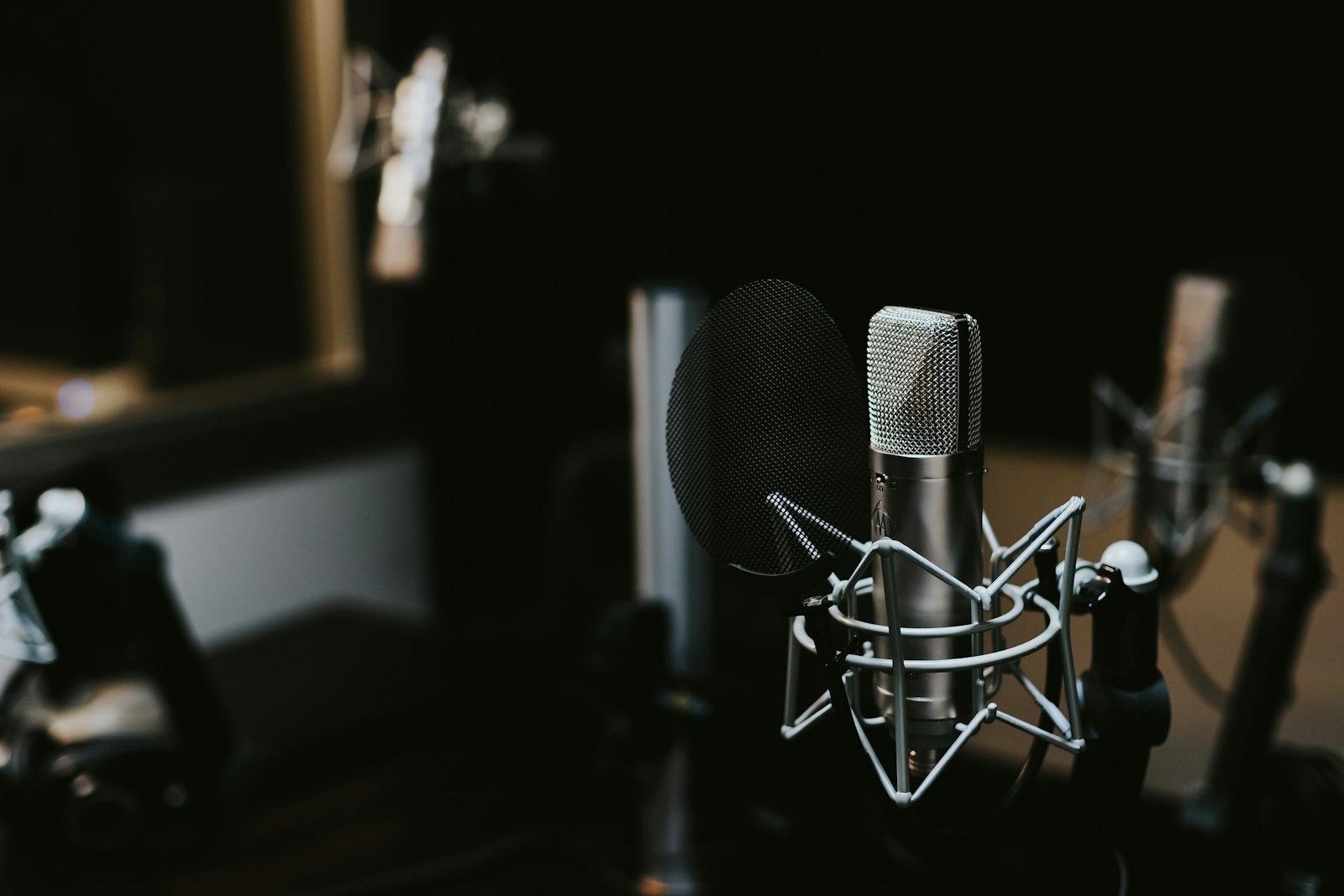
- Record dry. A quiet room, close mic, no music, no reverb. Soft furnishings beat bare walls. If you can hear the room in your sample, the clone will carry it forever.
- Speak the way you want the clone to speak. Cloning captures your delivery along with your timbre. A sample read in monotone produces a monotone clone. Record in your natural on-camera energy.
- Vary sentence types. Questions, exclamations, lists, and long flowing sentences give the system a wider picture of your prosody than repeating similar declarative lines.
- Keep one speaker only. Cross-talk, even briefly, contaminates the embedding.
- Skip heavy processing. Compressors, EQ, and noise gates alter the exact characteristics the system is trying to learn. Clean raw audio, lightly trimmed, wins.
After cloning, the remaining quality levers move to generation time: script punctuation shapes pacing (commas and em dashes are your phrasing controls), and shorter paragraphs per generation give you retry granularity when one sentence lands wrong.
Where cloning fits a creator workflow
The obvious use is narrating without recording — every faceless channel's dream. The less obvious wins are often bigger:
- Fixing lines without re-recording. Flubbed a word in minute 7? Generate the corrected sentence in your cloned voice and patch it in.
- Consistent narration across a series. Your energy varies day to day; your clone's doesn't. Batch-producing a week of voiceover in one sitting keeps a series sonically uniform.
- Scaling multilingual content. Several systems can carry a cloned voice identity into other languages, letting your Spanish dub still sound like you — pair it with lipsync and you've localized an entire video.
- Separating writing from performing. Scripts can be produced, revised, and approved as text, then voiced on demand — which is how teams run faceless video pipelines at volume.
On Versely, cloning lives alongside multiple TTS engines (ElevenLabs, Cartesia, Gemini, Qwen 3), so you can test your script against your clone and stock voices in one place via the voice cloning tool. The step-by-step setup is covered in how to clone your voice with AI.
The consent line: non-negotiable
Cloning your own voice is straightforward. Cloning anyone else's requires their explicit permission — full stop. This isn't just an ethics posture:
- Platform rules. Major platforms remove content using synthetic voices of real people without consent, and repeated strikes hit the channel, not just the video.
- Law is catching up. Right-of-publicity and voice-likeness protections have been expanding, and commercial use of an unauthorized clone is exactly the case regulators target.
- Trust is the asset. For a creator, your voice is brand equity. The norm that protects yours is the same one that protects everyone's.
Practical rule: clone voices you own or have written permission to use, disclose synthetic narration where a platform asks for it, and keep your source samples private — they're the key to your voice.
Realistic expectations
A good clone passes casual listening. Close listening still reveals tells: slightly too-even pacing, laughter and non-speech sounds that ring false, and occasional flat readings of emotionally loaded lines. The gap keeps narrowing, but the craft answer today is to write for the clone — clear sentences, punctuation that encodes your intended rhythm, and a human review pass before publishing. Treat the clone as a very fast voice actor who never gets tired but sometimes misreads the room.
FAQ
How much audio do I really need to clone my voice?
Around one to three minutes of clean speech is enough for an instant clone that handles short narration well. Trained clones use thirty minutes or more to capture emotional range for long-form work. Beyond those thresholds, cleaner and more varied audio improves results far more than simply adding minutes.
Does a voice clone reuse pieces of my recordings?
No. The system computes a compact numerical fingerprint of your voice from the samples, then a large text-to-speech model generates entirely new speech steered by that fingerprint. That's why the clone can say words and sentences you never recorded.
Why does my clone sound flat compared to my real delivery?
Two common causes: your sample was read in a flatter register than your natural on-camera energy, or you're generating long unpunctuated paragraphs that give the model no phrasing cues. Re-record samples at performance energy and use punctuation deliberately to shape pacing.
Can I use a cloned voice commercially?
Cloning your own voice for commercial content is fine on paid plans of most platforms, including Versely. Using anyone else's voice requires their explicit permission, and unauthorized clones of real people violate platform policies and, increasingly, likeness laws.
Will my clone work in other languages?
Several modern systems carry a cloned voice identity across languages, so your clone can narrate in a language you don't speak while keeping your timbre. Accent authenticity varies by language pair, so test a short sample before committing to a full localized series.
Want to hear your own clone today? Record a clean one-minute sample and set it up in Versely's voice cloning studio — a $1 credit pack covers the test generations, and your clone plugs straight into videos, captions, and scheduled posts from the same workspace.