

Brand Promotion Through Podcasts and Clips
Turn a podcast into a brand promotion engine: guest strategy, clip selection rules, a repeatable production pipeline, distribution, and what to measure.
A B2B software company I work with runs a fortnightly podcast that gets about 900 downloads an episode. By podcast-industry standards that's nothing. By pipeline standards it's their best-performing marketing activity, because those 900 listeners include roughly forty people from target accounts, and because each 50-minute episode produces eleven short clips that do most of the company's social output for the following two weeks.
That's the actual case for a brand podcast in 2026. Not the download number — the content pipeline. One recording session generates a long-form asset, a dozen clips, a newsletter, a blog post and a stack of quotes, and it does so on a schedule, from a format that gets easier rather than harder over time.
The catch is that most companies run the podcast and skip the pipeline. They publish the episode, post one clip if someone remembers, and wonder why the channel isn't producing results. Here's the version that works.
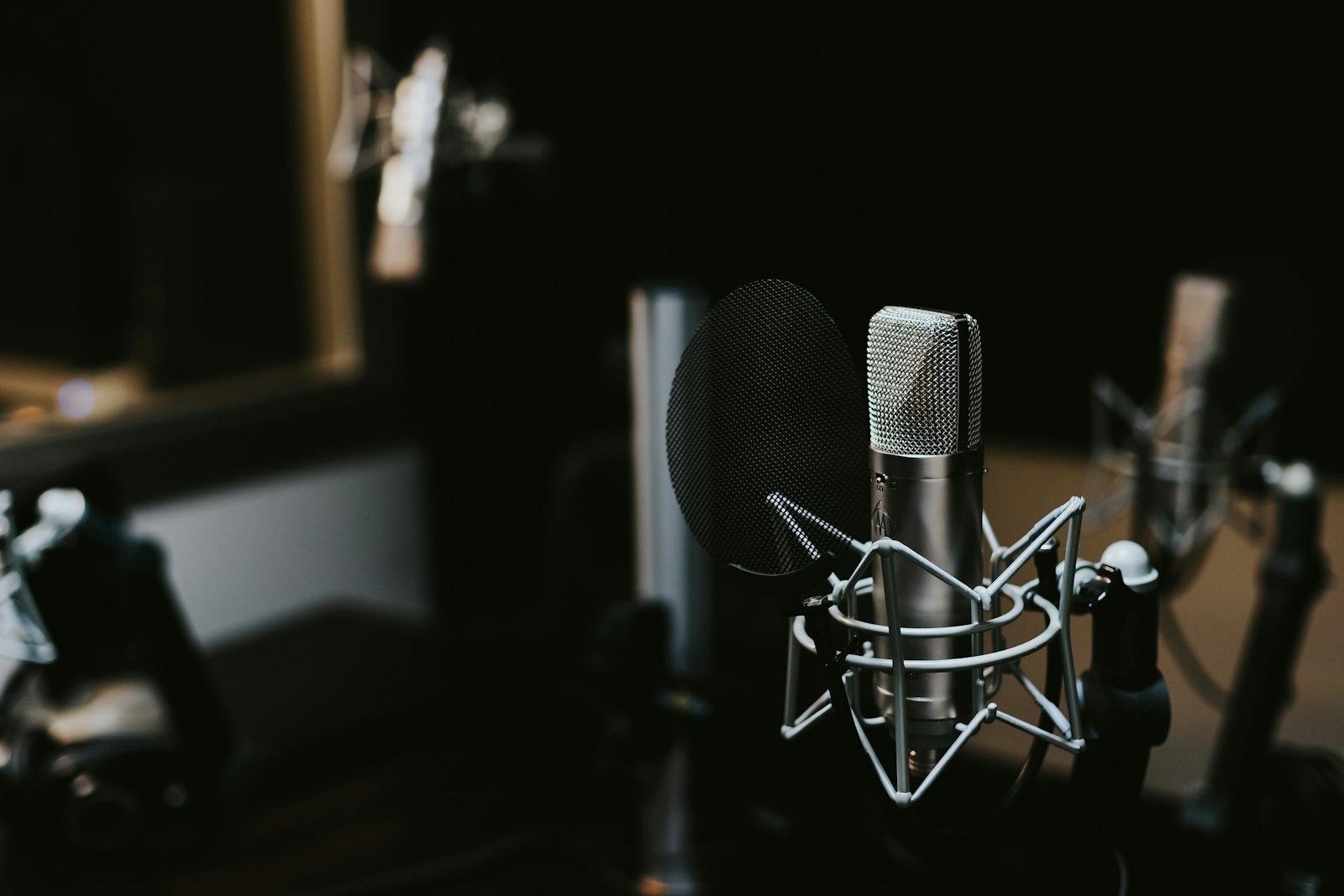
The podcast is the raw material, not the product
Reframe the economics before anything else. A 50-minute episode costs roughly:
- 1 hour of guest outreach and scheduling
- 45 minutes of prep
- 1 hour recording
- 3–4 hours of downstream production
If you judge that against download numbers, it looks expensive. If you judge it against the asset yield — one long-form video, one audio episode, 8–12 vertical clips, one newsletter, one article, and a set of quote graphics — it's the cheapest content in your entire mix on a per-asset basis.
That reframe changes decisions immediately. You record video even if you publish audio, because clips need picture. You steer conversations toward self-contained answers. And you build the clip pipeline before episode one, not after episode twelve.
Guest strategy is distribution strategy
For brand promotion specifically, who you invite matters more than what you ask them.
Three guest types, each with a different job:
Customers. The highest-value guests for pipeline, because the conversation is implicitly a case study and the clips are implicitly testimonials — real ones, from a real person, which is the one thing synthetic content should never fake. Ask about their problem and their process, not your product.
Peers and adjacent vendors. These earn reach, because the guest shares. Pick people whose audience overlaps yours without competing, and make sharing effortless: send their clips, cut to their aspect ratios, within 48 hours of recording.
Internal experts. Cheapest to schedule, best for depth, worst for reach. Use them to fill calendar gaps and build the topical authority that makes the channel coherent.
A workable ratio over ten episodes: four customers, four peers, two internal. Skew toward customers if pipeline is the goal, toward peers if awareness is.
Clip selection: the rules that matter
This is where most of the value is created or lost. Eleven clips from one episode sounds like a lot until you realize that a 50-minute conversation genuinely contains about that many self-contained moments — if you know what to look for.
Clip-worthy moments have one of five shapes:
- The contrarian claim. "Most people think X. That's backwards." Highest share rate of any clip type.
- The specific number. Any moment where the guest quantifies something. Numbers travel.
- The story. A short anecdote with a beginning and an end. Best hold rate.
- The framework. "There are three kinds of…" Highest save rate.
- The correction. The guest disagreeing with the host, or with a common belief. Highest comment rate.
What is not clip-worthy, no matter how good it felt in the room: introductions, mutual agreement, context-dependent references to something said earlier, and anything requiring the previous ninety seconds to make sense.
Practical method: mark timestamps live during recording. The host or producer notes anything self-contained. This costs nothing and cuts clip-hunting from an hour to ten minutes — the format-level detail is covered in AI video for podcast clip creators.
The production pipeline
Here's the pipeline, as a repeatable sequence. The point is that steps 2 through 6 should run the same way every episode.
| Step | Input | Output | Owner |
|---|---|---|---|
| 1. Record | Guest + questions | Video + audio master | Host |
| 2. Mark and pull | Timestamps | 8–12 raw clips | Producer |
| 3. Reframe | 16:9 clips | 9:16 versions, subject-tracked | Automated |
| 4. Caption | Clips | Auto-timed styled captions | Automated |
| 5. Package | Captioned clips | Hook text, title card, end frame | Producer |
| 6. Schedule | Packaged clips | Two weeks of posts across platforms | Automated |
| 7. Guest kit | Guest's clips | Sent within 48h | Producer |
Steps 3, 4 and 6 are the ones worth automating hard. Reframing a horizontal conversation to vertical without losing the speaker, generating timed captions from the speech, and scheduling across platforms are all mechanical, and doing them by hand is where podcast pipelines quietly die. The AI video editor handles the reframe-and-caption pass, and a saved workflow can run the whole clip treatment on a schedule so the fortnightly batch isn't a fresh project each time.
Step 5 stays human. The hook text on a clip is the difference between 800 views and 30,000, and it requires knowing what your audience finds surprising.
Distribution: eleven clips is not eleven posts
The instinct is to dump every clip in the week after publication. Don't. Spread them across the full gap to the next episode, and treat each as a post in its own right rather than as promotion for the episode.
A fortnightly rhythm:
- Day 0 — episode publishes. Post the strongest clip, with the episode link in the second comment or bio, not stapled to the hook.
- Days 1–13 — one clip every weekday-ish, rotating clip types so the feed isn't five contrarian claims in a row.
- Day 3 — the newsletter, built from the transcript, with two clips embedded.
- Day 7 — the article version, which is where search traffic comes from over the following year.
- Day 10 — a quote graphic or carousel from the framework moment.
- Ongoing — repost the best clip from three months ago. Nobody remembers, and the algorithm doesn't care.
The clips are the product; the episode is the archive. Most people who become customers will never listen to a full episode, and that's fine.
Measuring it without lying to yourself
Downloads are the least useful number available. Track instead:
- Clip-level retention and shares, cohorted by clip type, so you learn which conversational shapes work and can steer future recordings toward them.
- Guest amplification. Did they share, and did the share drive anything? This tells you whether your peer selection is working.
- Branded search and direct traffic in the weeks following a strong episode.
- Sales-cycle mentions. Ask your sales team to log when a prospect mentions the podcast. In the company above, that number was why the show survived a budget review.
Review at a cohort of five episodes. Individual episodes vary too much on guest reach to tell you anything.
Common failure modes
- Recording audio only. You've forfeited the clip pipeline, where the value is. Record video even for an audio-first show.
- Letting clips pile up. A backlog of unedited episodes is the classic death spiral. Automate steps 3, 4 and 6, or cut cadence until you can.
- Pitching in the episode. The show's credibility is the asset. Sell in the description and in the follow-up, not in the conversation.
- Inconsistent visual identity. Every clip should be recognizably yours — same caption style, same frame treatment, same end card. Save it once as a preset and never rebuild it.
- No guest kit. Sending a guest their clips ready to post is the highest-return 15 minutes in this entire pipeline, and most shows skip it.
FAQ
How many clips should one podcast episode produce?
Eight to twelve from a 45–60 minute conversation, if you're marking self-contained moments during the recording. Fewer than six usually means the conversation stayed too contextual — steer future episodes toward standalone answers.
Does a brand podcast need a big audience to be worth it?
No. For B2B especially, a few hundred listeners containing the right forty people beats tens of thousands of irrelevant ones. The clip pipeline also means the show pays for itself as a content engine regardless of download numbers.
Should we publish the podcast as video or audio?
Record video always; publish whichever your audience prefers. Video recording is what makes the clip pipeline possible, and a full-length video version on YouTube adds a search surface that audio-only shows don't get.
How do we make podcast clips without an editor?
Automate the mechanical passes — vertical reframing, timed captions from the speech, and scheduling — and keep the human effort on clip selection and hook text. That's the split that lets one producer handle a fortnightly show's full output in a couple of hours.
How long should podcast clips be?
30–60 seconds for most platforms, with the strongest 15-second cut reserved for the highest-competition feeds. The clip should end on the payoff, not on the guest trailing off — cut earlier than feels natural.
If your episodes are already piling up unclipped, the fix is to build the treatment once — reframe, captions, end card, schedule — as a saved workflow, then run it against every new recording so the pipeline keeps moving without a decision being required each fortnight.