

The LinkedIn Content Engine for Business Teams
A LinkedIn content engine for business teams: roles, a weekly production loop, the post-type mix that works, batching video, and the metrics worth reporting.
The marketing team at a 90-person B2B software company was producing four LinkedIn posts a week and it was consuming roughly 11 hours. Three people touched every post. The founder was a bottleneck on two of them. Twice a month a post missed its slot entirely because someone was on PTO.
We rebuilt it as an engine rather than a series of one-off productions: fixed roles, a fixed weekly loop, four locked formats, and a monthly batch that front-loads the work. Same four posts a week, three and a half hours, no single-person dependency. The output quality went up, mostly because nobody was writing a post at 6pm on the day it was due.
That's the whole idea behind a content engine. You're not trying to make each post better. You're trying to make the system produce good posts by default, so that a bad week doesn't produce a bad month.
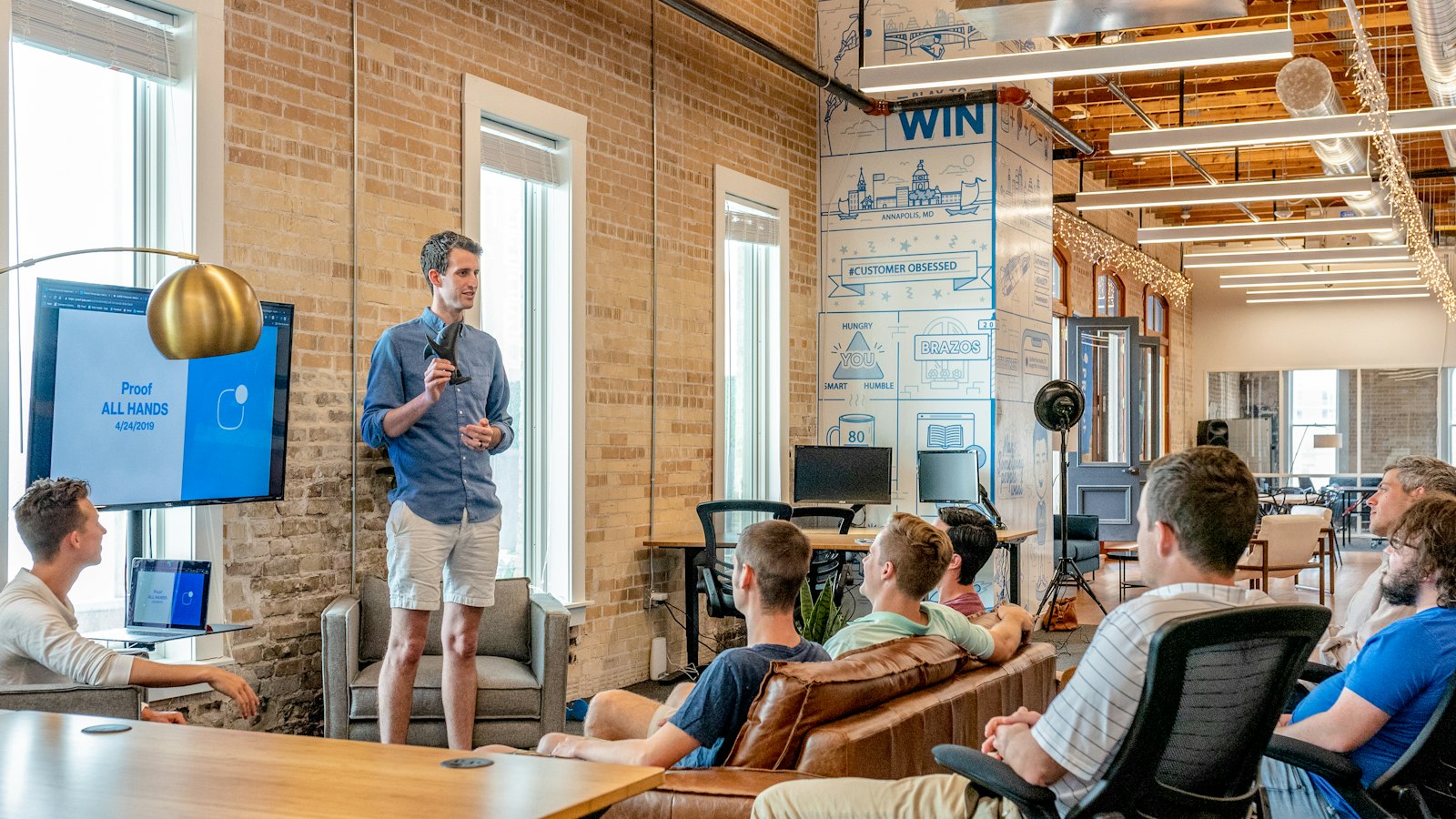
Roles: who owns which part
Undefined ownership is the actual failure. Every stalled LinkedIn program I've looked at has the same symptom — three people who each think someone else is unblocking the post.
| Role | Owns | Time per week | Who typically holds it |
|---|---|---|---|
| Voice | Opinions, POV, final say on tone | 45 min | Founder or SME |
| Editor | Scripts, hooks, structure, queue | 4–5 hrs | Content marketer |
| Producer | Video, captions, thumbnails, scheduling | 3 hrs | Designer or marketing ops |
| Responder | Comments, DMs, first-hour engagement | 3 hrs | Whoever's face is on it |
Two rules make this work. First, the Voice role never touches production — the moment a founder is expected to edit video, the queue stops. Second, the Responder must be the person whose account it is; delegating replies is detectable within about two exchanges and it costs you the credibility the post earned.
For a small team, one person can hold Editor and Producer. The LinkedIn company page video playbook covers the brand-account side, which runs on the same roles with lower stakes.
The weekly loop
The engine runs on a fixed weekly rhythm with a monthly batch behind it. Nothing here is improvised.
Monday — input (45 min, Editor). Pull raw material: last week's sales-call objections, support tickets, a competitor's announcement, an industry report, one thing the Voice said in an internal meeting. Ten candidate ideas. Score them on "would a buyer in our segment stop for this" and pick four.
Tuesday — draft (2 hrs, Editor). Write four scripts. Hook first, always. Each script is 120–180 words for a 45–75 second video, or 150–250 words for a text post.
Wednesday — Voice pass (20 min, Voice). One sitting. Approve, sharpen, or kill. No meetings. The Voice's job is to make it sound like them and to add the one specific number or opinion the Editor couldn't invent.
Thursday — production (2 hrs, Producer). Generate the non-face videos, cut the face takes from the monthly filming bank, apply the caption preset, build the queue. Scheduling is done here, not on the day.
Friday–next Thursday — publish and respond. Posts go out on the schedule. The Responder is in comments for the first hour of each.
The monthly batch sits underneath: one 90-minute filming block producing 12–16 raw takes, which the Producer draws from for the whole month. That single change removes the most common cause of a missed slot.
The post mix that actually works on LinkedIn
Four locked formats, rotating. Locked means the structure is fixed and only the content changes — which is what makes production fast and makes your account recognizable.
- The specific answer (2 per week). One buyer question, answered concretely. These are the posts that get saved and sent internally, which is the behavior that matters in B2B.
- The number post (1 per week). A real operational figure with the reasoning behind it. Not a market-size stat from a report — your own throughput, ratios, timelines, or failure rates.
- The POV (1 every 2 weeks). A position your competitors wouldn't state. Highest reach, highest variance.
- The proof cut (1 every 2 weeks). A result, a process shot, a before/after, a real screen recording.
What to cut from the rotation entirely: company news that isn't a product change, event booth photos, "thrilled to announce," and reposts of your own blog with a link in the first line. LinkedIn suppresses outbound links in-post; put them in the first comment or in your profile.
On format: native video with burned-in captions outperforms text for the answer and proof formats in most B2B accounts, and text still wins for POV posts where the argument is the product. Test both for a month before committing.
Batching video so the queue never runs dry
Video is where LinkedIn engines usually break, because filming is a scheduling dependency and scheduling dependencies fail.
Split your video into two production paths:
- Face path (monthly). One 90-minute block. Tripod, one room, one outfit, 12–16 takes of 45–75 seconds. Bank it. The outfit consistency is deliberate — nobody notices, and it means you can publish October's takes in November.
- Faceless path (weekly, no calendar dependency). Explainers, data commentary, teardowns, process walkthroughs. Script it, generate the visuals and voiceover, add captions, done. No camera involved, so it never blocks.
The faceless path is what keeps the cadence stable, and it's roughly two-thirds of a healthy B2B LinkedIn mix. An AI video generator plus a locked caption preset turns a finished script into a publishable asset in a few minutes, which is what lets the Thursday production block stay at two hours.
Once a format has run four or five times without changes, save it as a reusable workflow — scenes, voice, caption style and aspect ratio fixed — so each new post is a script swap rather than a rebuild. If you want the posts to fire on a fixed schedule without someone remembering, scheduled workflows that auto-post to social covers that end of the pipe.
Distribution: the part teams skip
Publishing is not distribution. Three habits do more for LinkedIn reach than any change to the post itself:
- First-hour replies. The Responder answers every comment within 60 minutes, with substance. This is the highest-leverage hour in the whole engine.
- Outbound commenting. Each account holder leaves 8–10 substantive comments a day on posts their buyers read. This is how new accounts get seen at all, and it costs no production.
- Internal amplification without the cringe. Employees engaging genuinely helps. Employees pasting the same approved comment does not, and it's obvious. Share the post in a channel, ask for real reactions, accept that most won't.
Skip paid amplification until organic is stable. Boosting a post that doesn't earn organic engagement buys impressions and teaches you nothing.
What to report
Report monthly, on five numbers, to whoever funds the program:
- Posts shipped vs. planned. The engine's health metric. If this slips below 85%, fix the loop before touching content.
- Median reach per post (not mean — one viral post distorts the average badly).
- Saves and reposts per post. The B2B signals that map most closely to internal sharing.
- Unique commenters with target job titles. Quality of audience, not size.
- Inbound conversations sourced to LinkedIn. Self-reported on forms and in first calls.
Deliberately not on the list: follower growth and impressions. Both are lagging, noisy, and easy to grow in ways that don't help. Best AI tools for LinkedIn video covers the tooling side if you're still assembling the production stack.
FAQ
How many people do you need to run a LinkedIn content engine?
Two, at minimum: one Voice and one person holding Editor plus Producer. Three is comfortable. The constraint isn't headcount — it's whether the Voice can reliably give 45 minutes a week and the Responder can be in comments for the first hour after each post.
How often should a business team post on LinkedIn?
Three to four times a week per account is the range where quality holds and distribution stays stable. Daily posting works only if you have a genuine backlog of specific material; otherwise it drags your engagement average down and reduces reach on the posts that deserve it.
Should posts come from the company page or personal accounts?
Personal accounts for reach and replies, company page for proof, product news and recruiting. A workable split is one founder account, two SME accounts, and a page that reposts. The page rarely generates conversation on its own.
Does video outperform text on LinkedIn?
For explainers, proof and answer posts, native video with burned captions generally outperforms. For argument-led POV posts, text often still wins because the reasoning is the content. Run both formats for a month and let your own numbers decide rather than following a general rule.
How do you keep a LinkedIn engine going during a busy quarter?
The monthly filming batch and the faceless production path are what make it survivable. If everything is produced weekly and in real time, the first crunch week kills the cadence. Bank face content a month ahead and keep two evergreen posts in the queue as buffer.
Get the Thursday production block down to two hours and the rest of the engine holds together on its own — script the week, generate the faceless formats, apply one caption preset, and let a saved workflow publish on schedule to LinkedIn and everywhere else you post.