

GPT-Image-2.5 Flare vs Sunburst
Flare is the default API pick for speed; Sunburst is for precision edits that take longer. ChatGPT Images 2.5 shipped 8 Sept 2026.
Flare is the default API pick for speed. Sunburst is the slower lane when a campaign edit has to land exactly. OpenAI launched ChatGPT Images 2.5 on 8 September 2026 with sharper detail, tighter edits, better reference lock, and up to 50% lower latency versus Images 2.0 on the Flare path. The ChatGPT product surface and the two API model IDs are different decisions. Do not treat them as one row.
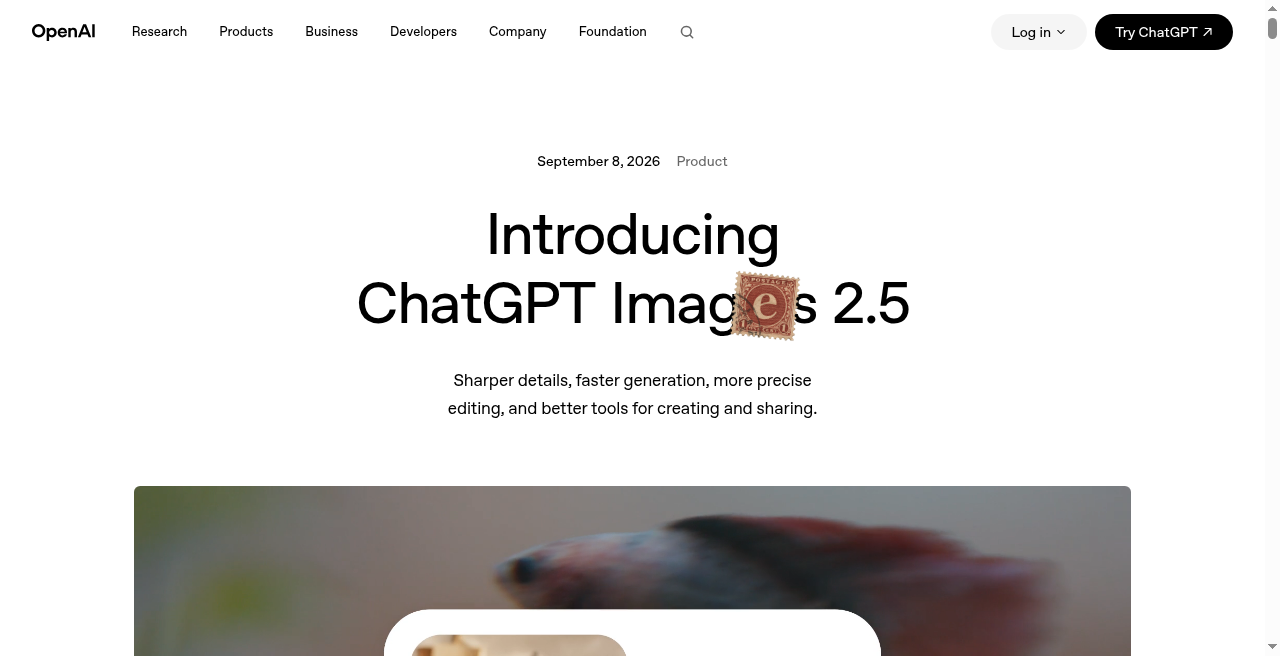
What shipped in ChatGPT on 8 September
Images 2.5 is rolling out across ChatGPT, ChatGPT Work, and Codex on desktop, mobile, and web. OpenAI frames it as the new stills and edit model inside that product: faster generations, and edits that hold subjects, textures, and layouts across turns better than Images 2.0.
The product tools that actually change a creative desk:
- Sketch (
@Sketch). Draw a layout or contour in ChatGPT and use it as a visual guide. - Templates. Start from posters, merch, and similar formats instead of a blank prompt.
- Image comments. Pin a note on a region so the edit hits that spot instead of rewriting the whole frame.
- Share prompt. Attach the prompt when you share an image so a teammate can rerun the idea with their own photos.
Those live in ChatGPT. They are not a reason to invent a new slug in a multi-model studio catalog until the catalog lists 2.5.
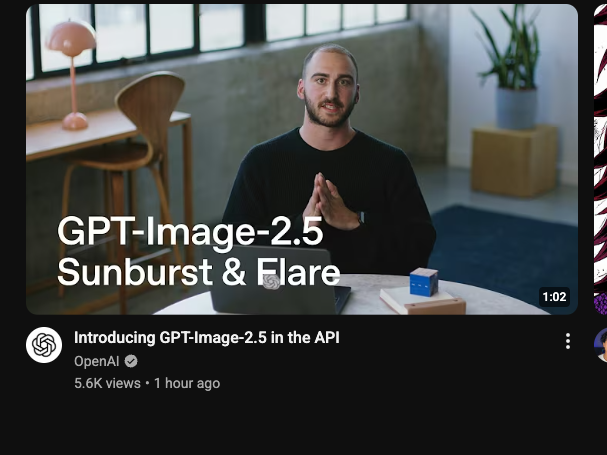
Flare vs Sunburst in the API
OpenAI released two API models with the same Images 2.5 quality story, split by job:
| API pick | OpenAI positioning | When to start here |
|---|---|---|
GPT-Image-2.5 Flare (gpt-image-2.5-flare) |
Default for most apps; higher quality than GPT-Image-2 at up to 50% lower latency | High-volume generation, social and product stills, visual search, rapid comps |
GPT-Image-2.5 Sunburst (gpt-image-2.5-sunburst) |
Extra precision for detailed creative work; longer generation times | Campaign creative, polished product imagery, edit-heavy passes that need tighter control |
OpenAI’s own prompting guidance is practical: if GPT Image 2 already meets the brief, try Flare first and keep it when quality holds and latency improves. If GPT Image 2 fails a complex edit, start on Sunburst, prove quality, then decide whether Flare can take the same brief. Do not invent a latency or quality score you did not measure on your own prompts.
This post will not invent pricing dollars. Check OpenAI’s current pricing page for token rates, and pin a dated snapshot in production when you need a fixed build.
What I’d actually do this week
- Run the same three product prompts on Flare and on your current GPT Image 2 row. Keep the winner; do not migrate for the press release.
- Save Sunburst for the keepers: label fixes, reference packs across a set, comment-driven local edits.
- Use Sketch or a template inside ChatGPT when the brief is layout-first and you are still exploring.
- Keep originals when provenance matters. OpenAI continues C2PA plus invisible watermarking (SynthID) across ChatGPT, Codex, and the API.
Provenance note
C2PA metadata and invisible watermarking are disclosure infrastructure, not a creative feature. If a client brief requires machine-readable labels, keep the original export and plan for re-encoding that drops manifests. Versely’s Article 50 and Content Credentials posts cover the deployer side of that stack.
How this sits next to Versely
Versely already meters GPT Image 2 text-to-image as an OpenAI stills row for prompt-obedient heroes and key art. Images 2.5 Flare and Sunburst are OpenAI API model IDs as of 8 September 2026. Do not claim a Flare or Sunburst catalog row here until one exists.
Until then:
- Keep routing obedient stills to the published GPT Image 2 row when that is the job.
- Use ChatGPT Images 2.5 (Sketch, comments, templates) when the brief is exploratory inside ChatGPT or Codex.
- Call Flare vs Sunburst directly on OpenAI’s API when you have measured which ID fits.
- Open Model Finder when the deliverable is motion, speech, or an edit job that is not a still. Dress UI captures with the free screenshot beautifier before you post them.
For the September stills map around GPT Image 2, Nano Banana 2, and Grok Imagine Image 2.0, see State of AI image, September 2026. That letter predates this 2.5 launch; treat 2.5 as the OpenAI stills update that landed on 8 September.
FAQ
Is Flare “worse” than Sunburst?
No. OpenAI positions Flare as the default speed path with the Images 2.5 quality and editing improvements, and Sunburst as the slower precision path for demanding creative work. Pick by job, then verify on your prompts.
Does ChatGPT Images 2.5 replace GPT Image 2 in every studio?
Not automatically. ChatGPT and the API got 2.5 on 8 September. Multi-model catalogs update on their own schedule. Keep using the published GPT Image 2 row until a 2.5 row is listed.
Do Sketch and image comments work in the API the same way?
Sketch, templates, image comments, and share-prompt are ChatGPT product features in the launch materials. The API story is Flare versus Sunburst model IDs plus the image generation parameters OpenAI documents for those models.
What about watermarks on client delivery?
OpenAI attaches C2PA and invisible watermarking. Your pipeline may strip metadata on re-encode. Keep originals when provenance is contractual, and label AI stills when the channel or region requires it.