

Rumik Silk Indic Expressive TTS
Muga (tone tags) and Mulberry 1.5 (descriptions) power Rumik Silk Indic/Hinglish expressive TTS. Open Mulberry is preparing, not a confirmed HF drop.
Rumik Silk ships Muga (tone tags) and Mulberry 1.5 (natural-language descriptions) for expressive Indic and Hinglish text-to-speech over a production API. Highly expressive Indic voice models are the point. Open Mulberry weights are something Rumik says it is preparing, not a confirmed Hugging Face drop you can clone today.
What Silk is
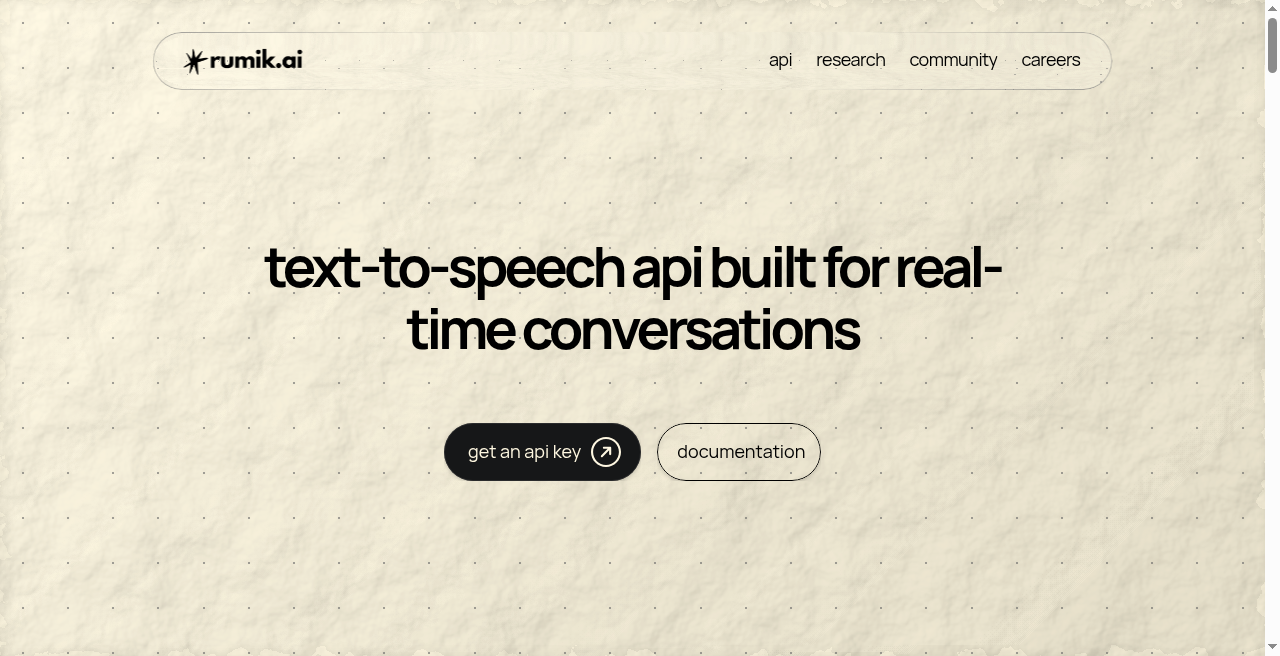
Silk is Rumik’s text-to-speech API: send text, get 24 kHz mono audio back over HTTP or a real-time WebSocket stream. Rumik positions it for voice agents and conversational products, with docs and a playground at docs.rumik.ai.
Two production models, steered differently:
| Model | Steer with | Best for |
|---|---|---|
Silk Muga 1 (muga) |
Tone tag prefix such as [happy], [sad], [excited], [angry], [whisper], [neutral] |
Expressive reads where a short emotion tag is enough |
Silk Mulberry 1.5 (mulberry) |
Natural-language description, optional preset speaker |
Instruct-style voice design and faster conversational turns |
Docs show Hinglish and Indic-friendly examples in the quickstart (for example a [happy] Muga line that code-switches). Rumik’s marketing surface lists English, Hindi, Hinglish, Tamil, Telugu, Bengali, Marathi and more, with mid-sentence language switching. That is the product claim to verify on your script, not a third-party MOS table.
Why Indic expressiveness is the angle
Most global TTS stacks are strong on English presets and weak on the way people actually talk across India: Hinglish, Tanglish, Manglish, romanized mixed script, emotion mid-sentence. Rumik’s Silk 1 research note is explicit about that gap: public multilingual TTS data is thin, code-switched data is rarer, and expressive tagged data is rarer still.
The research post describes the design goals that later show up in the API:
- Companion-style speech, not IVR flatness.
- Mid-utterance emotion tags and light tone descriptions in training.
- Code-switching that keeps a consistent accent across language boundaries.
- Latency low enough for conversation (the research note cites roughly 300 ms average inside Rumik’s Ira companion product).
That is why Muga and Mulberry matter as a pair. Muga is the tone-tag control surface. Mulberry is the description-led control surface. Pick the steering method that matches how your writers already brief a voice actor.
Honesty check: open Mulberry weights
Rumik’s research page says the team is preparing to release Silk 1 Mulberry as an open-source model from the Silk series, with more work on stability, expressiveness, and multilingual blending. Preparing is not the same as “weights are on Hugging Face today.”
For this post:
- Confirmed: Silk API with Muga and Mulberry 1.5 for production TTS.
- Confirmed intent: open Mulberry is on Rumik’s public roadmap language.
- Not confirmed here: a live HF repo, license file, or downloadable checkpoint. Do not claim open weights until you can open the repo yourself.
If your procurement rule is “must be self-hostable Apache weights,” Silk API is the wrong checkbox today. If your rule is “must sound like Hinglish with controllable emotion for an agent,” the API is the product to evaluate.
What I’d actually do
- Take one real Hinglish script (not a polished English line) and run it on both Muga and Mulberry.
- For Muga, try
[happy]and[neutral]on the same sentence before you invent a custom tag set. - For Mulberry, write the voice description the way you would brief a human VO: age band, energy, accent note.
- Only then wire the wav into a lipsync or talking-head generate. The TTS model does not become a video model.
Where this sits next to Versely
Versely already exposes TTS and dubbing entry points such as AI text-to-speech for scripts that need a wav before lipsync or captioning. Rumik Silk is a specialist Indic/Hinglish expressive stack. Do not invent a Muga or Mulberry row in the Versely catalog from this article.
Practical split:
- Use Silk (Muga or Mulberry) when Indic or Hinglish expressiveness is the product.
- Use Versely’s published TTS / dubbing tools when you are already inside a Versely stills-to-video or caption pipeline and the catalog voice is enough.
- After you have the wav, finish on Versely: AI caption generator, free loudness meter, or burn captions before upload.
- Keep emotion direction in the script (tags for Muga, descriptions for Mulberry) the same way you would brief a human VO.
FAQ
Is Mulberry open source right now?
Rumik says it is preparing an open Mulberry release. This post does not claim Hugging Face weights are available until that drop is public and verifiable.
Muga or Mulberry for a voice agent?
Muga when a short tone tag per turn is enough. Mulberry when you want a natural-language voice description or a named preset speaker. Test both on the same Hinglish script before you standardize.
Does Silk replace ElevenLabs or Cartesia for every language?
No. Silk’s wedge is expressive Indic and code-switched speech. English-only flat reads may still belong on whatever engine already wins your latency and price tests.
Can I put Rumik audio on a talking-head generate?
Yes as a workflow: synthesize the wav, then feed it to a lipsync or avatar row that accepts driving audio. The TTS model does not become a video model.