

GPT-6 Astra will not make your videos
Astra does not generate video, image, or audio. It is OpenAI's computer-use model; use Veo, Seedance or Kling for clips.
GPT-6 Astra will not make your videos. OpenAI announced it on 3 September 2026 as a computer-use and software-engineering model; the announcement does not include image, video, or audio generation.
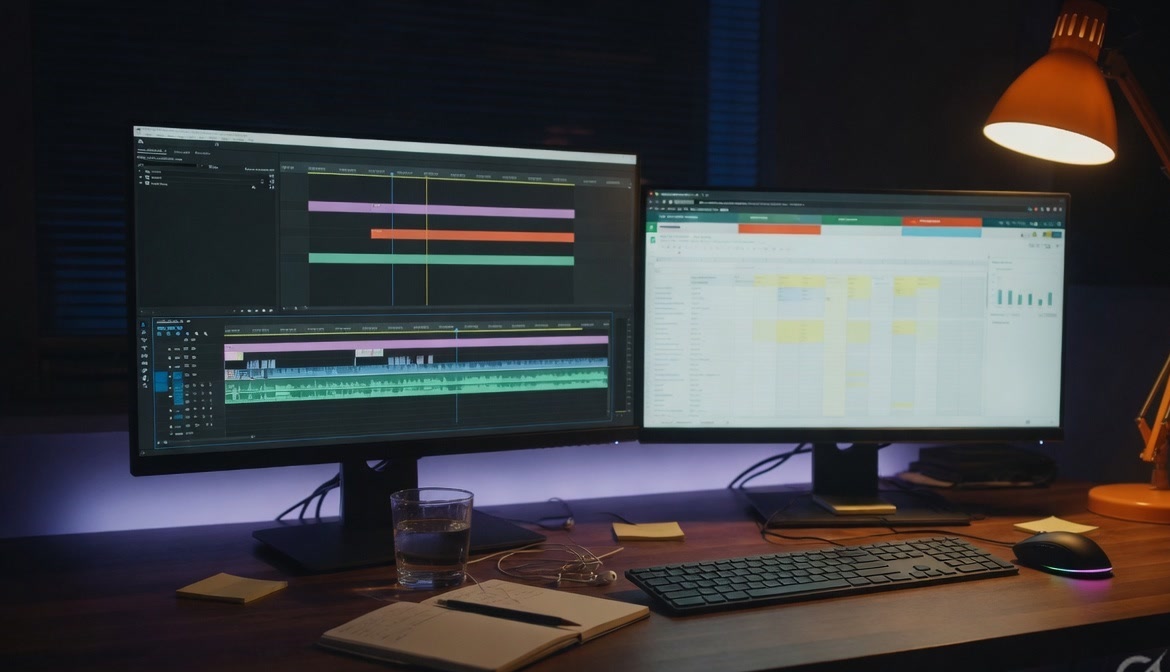
OpenAI's own Astra page (3 September 2026) and the same-day reports from TechCrunch and CNBC describe a model that operates a computer, writes software, and sits at the top of math and cyber benches. None of those pages list a media model. If you opened ChatGPT looking for a Sora successor, you opened the wrong row.
What Astra actually is
Press and OpenAI's ChatGPT and Codex notes call the model GPT-6 Astra. OpenAI frames it as its most capable model to date, with a stated focus on computer use, browsing, software engineering, cybersecurity, science, and professional work. 9to5Mac's same-day recap quotes OpenAI's own numbers: FrontierMath Tier 4 at 98 percent, ARC-AGI-3 at 99.9 percent, ExploitBench at 100 percent. TechCrunch reports it beat OpenAI's Sol and Anthropic's Fable on bug finding, terminal tasks, and codebase questions. Those are software-engineering scores. They are not clip scores.
The computer-use claim is the part that matters for a content shop, and it is still not a renderer. OpenAI says Astra can operate a Mac or other desktop, including in the background, and produce documents, spreadsheets, and presentations. In Codex, Astra can keep notes across context windows instead of compacting a long session into one summary, and earlier windows stay searchable. That is an agent that can sit on a machine and keep working. It is not a camera.
Cybersecurity is the other headline, and it is gated. OpenAI says Astra is the first of its models to meet the Critical cybersecurity threshold in its Preparedness Framework, with a perfect ExploitBench score. The most advanced cyber capabilities sit behind an application-based program; TechCrunch reports Daybreak customers get them first. OpenAI's Path to Astra note is the preparedness write-up, not a creative-tools write-up.
Availability follows that caution. Astra began rolling out on 3 September 2026 to a limited set of organisations. OpenAI says Plus, Pro, Business, and Enterprise users, plus the API and AWS, follow within about a week of that date. Usage sits inside existing subscription allowances, with extra usage sold as credits. GPT-6 Astra Pro is for Pro, Business, and Enterprise. Enterprise admins get it off by default. None of that schedule mentions a video, image, or audio SKU.
The controversy is about oversight, not media. Astra uses "opaque recurrence", a reasoning method that hides chain-of-thought monitoring. TechCrunch reports OpenAI downplayed how much of the model works this way; chief scientist Jakub Pachocki framed opacity as a side-effect of more capable models using fewer language tokens, or none. Alignment researchers care because they can no longer read the scratchpad. Creators should care only in this narrower sense: the model you are being sold as an operator is harder to audit than the one it replaces. That is a procurement fact. It is not a reason to wait for a video model that was not announced.
What the announcement left out
OpenAI did not announce image generation for Astra. It did not announce video generation. It did not announce audio generation. That absence is the whole point of this page. A frontier chat model can still write a prompt, a shot list, or a Python script that calls someone else's video API. Writing the prompt is not making the clip. Calling an API is not being the model behind the API.
This mix-up is old. GPT-4-class models have written Sora prompts for a year. GPT Image 2, launched 21 April 2026, is a different OpenAI product: a stills and editing model, already a separate row. Sora was the video product, and it is ending. The Sora web app and consumer app discontinued on 26 April 2026. The Sora API — sora-2, sora-2-pro, and the snapshots — shuts down on 24 September 2026. The Sora API sunset migration plan is the checklist if anything in your stack still calls that endpoint. Astra does not replace it. Astra does not extend it. Astra is not the thing you migrate to for pixels.
Treat "OpenAI released its most powerful model" as a sentence about agents. The computer-use demo is a desktop doing professional work: a spreadsheet that already existed, a slide deck, a long coding session that does not forget why a fix failed. That is useful. It is a different job from "give me eight seconds of a product on a table with native audio." Native audio means the video model generates picture and soundtrack in one pass. Astra does not do that pass.
If a vendor blog or a Twitter thread implies Astra "does video now," ask which artefact they mean. A model that can drive a browser can open a video site. A model that can write code can submit a generate job. Neither is image, video, or audio generation by Astra. Do not budget, brief, or promise a client an Astra clip. There is no Astra clip.
What will make the videos
The models that actually emit a file are the ones already in the catalog. Pick the row for the job, not the lab that had a good week.
Veo 3.1 is Google's current cinematic row: native audio, official 4K tier, 4 / 6 / 8 second clips. Veo 4 was not announced as of mid-2026; write "what we know," not "released." If the plate needs dialogue and a 4K finish, this is the row. The model does not change because you launched it from Gemini, Flow, or anywhere else.
Seedance 2.0 is ByteDance's audio-native generator: text, image, video, and audio in; up to 12 references; phoneme-level lip-sync in eight-plus languages; up to 15 seconds per generation. On Versely the row bills in credits. Vendor dollar-per-second figures you see on third-party hosts are not Versely prices and do not belong on a Versely invoice.
Kling O3 Pro text to video is the Kling row with audio generation and camera control, 3 to 15 seconds. Kling 3.0, released February 2026, is the family known for native 4K and stronger physics and camera motion. If you need a silent, cheaper iterate, Kling 3 Turbo text to video is a different row: 1080p, no native audio. Do not send a talking-head brief to a silent model and then blame Astra for the missing voice.
The launcher for those rows is the AI video generator, not ChatGPT. You describe the shot, you pick the model, you get a clip. Captions, dubs, and the next family still happen after the file exists. Astra can help you operate that pipeline — a sheet of takes, a briefing deck, a Codex script that hits an API — once you have pointed it at a real renderer. It cannot be the renderer.
Audio-native generation is the actual shift of this quarter, and it is happening in Seedance 2.0, Veo 3.1, and Kling 3.0, which produce synced audio in one pass. Veo is the one reliably doing 48 kHz dialogue. That is the catalog fact to brief against. It has nothing to do with opaque recurrence or ExploitBench.
If your week is "wait for OpenAI to ship the video model that must be coming," you are waiting on an unannounced product. Unannounced is the word. Sora's shutdown is the other half of that story: a video surface from the same vendor already went away. Build the slate on models you can call next week. Sign up and run the row the shot needs, not the model that had the louder keynote.
Put Astra on the ops desk, not the timeline
Astra still has a place in a content operation. The place is the desk around the timeline, not the timeline.
Use it where computer use is the job. A shot list in a spreadsheet, a client deck, a budget that has to survive a change in duration, a Codex session that keeps notes while you refactor a generate script — those are the tasks OpenAI actually described. Background desktop use is the feature to test, not "make me a 9:16 hero." If the model can drive your Mac while you edit, that is time you get back. If it cannot emit the clip, you already knew that from the first paragraph.
Keep the two catalogs apart. Chat models plan. Generation models render. Pinning a more capable chat model behind an agent does not change the MP4. That was already true for GLM, Grok, Claude, and Gemini; it is true for Astra. A prompt that says "use Astra" and does not name Veo, Seedance, or Kling is a prompt that will come back with a plan, a script, or a desktop action. It will not come back with a take.
Do not collapse cyber gating into a creative story. Daybreak access, the Critical threshold, and Enterprise-off-by-default are reasons a security team will care how you roll this out. They are not reasons a producer should delay a Seedance or Veo job. The advanced cyber features are gated because they are cyber features. Your product film is not in that queue.
Do not treat opaque recurrence as a reason to avoid the model for ops, or as a reason to trust it more. It is a monitoring gap. If you need a paper trail of why the agent moved a file, Astra is a worse witness than a model that still exposes chain of thought. If you need the file moved, it may still be the right operator. Decide that as an ops question. Then generate the video on a video model.
The test is boring, which is why it works. List the last ten artefacts you shipped. If they were clips, Astra was not the tool that made them, and it is not the tool that will make the next ten. If they were decks, sheets, scripts, and a generate job submitted from a terminal, Astra is in scope for the first three and still not in scope for the fourth. Keep the model. Keep it off the timeline.
FAQ
Does GPT-6 Astra generate video, image, or audio?
No. The 3 September 2026 announcement covers computer use, software engineering, browsing, science, professional documents, and cybersecurity. Image, video, and audio generation were not announced. A chat model that writes a video prompt is still a chat model.
Should I wait for OpenAI to add video to Astra?
Not for work you have to ship. Veo 3.1, Seedance 2.0, and Kling O3 Pro already generate clips with native audio. Sora's API shuts on 24 September 2026. Waiting on an unannounced Astra media SKU is how a slate slips.
Can Astra run my video pipeline anyway?
It can operate a desktop, write the script, keep Codex notes, and call tools. The pixels still come from a video row. Point the agent at Veo, Seedance, or Kling. Do not ask Astra to be the model that returns the MP4.